Murrays Painting
A website and search strategy focused on bigger repaint jobs, backed by fifty years of local painting experience.
- Professional Website
- Next.js
- Landing Page Build
- Schema Markup
- CRM
- Lead Routing
- Call Tracking
- Google Ads
- Local SEO
- Google Business Profile
- Hosting & Monitoring
- Search Console Reporting
- Content Updates
The website in motion
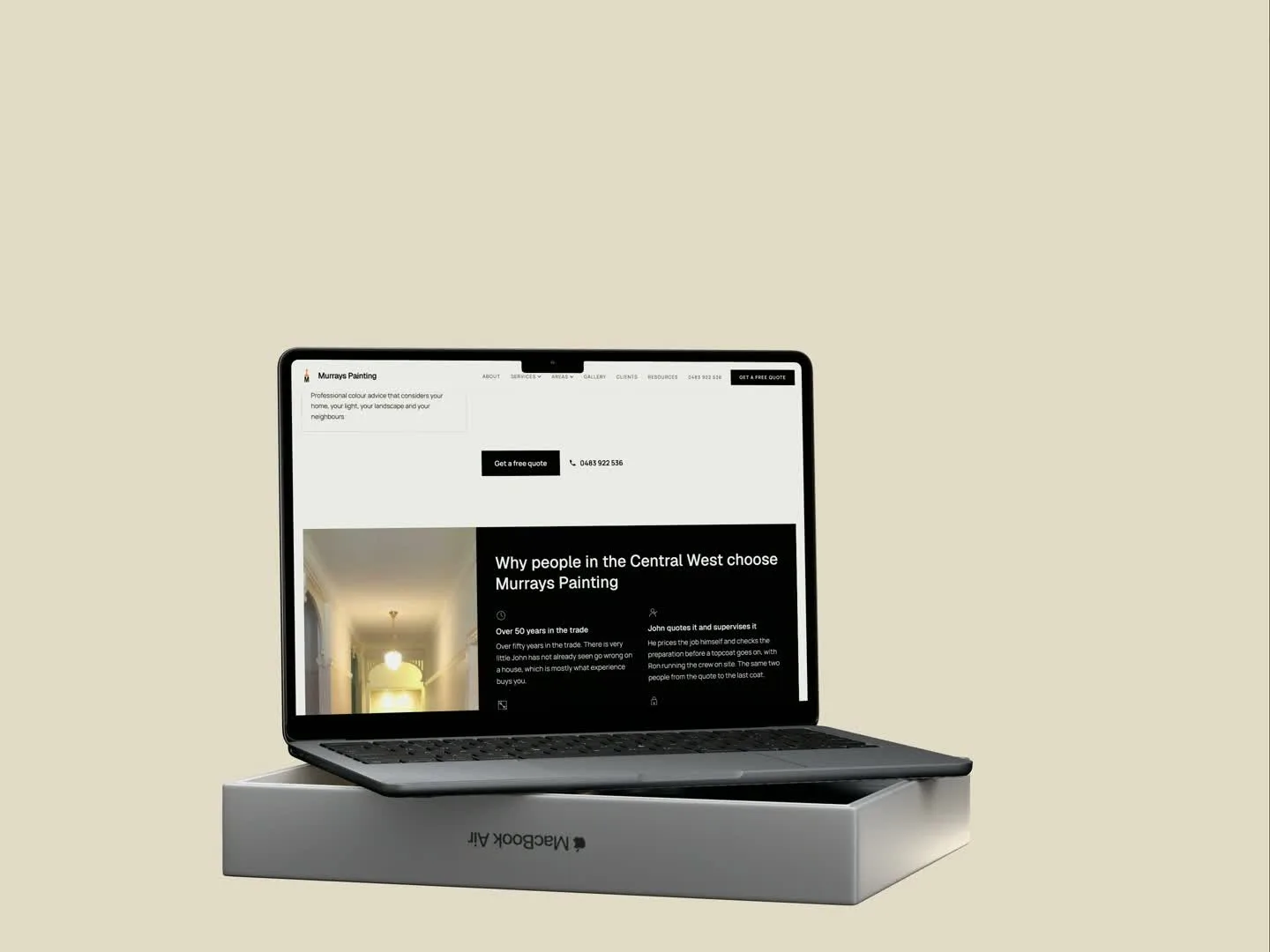

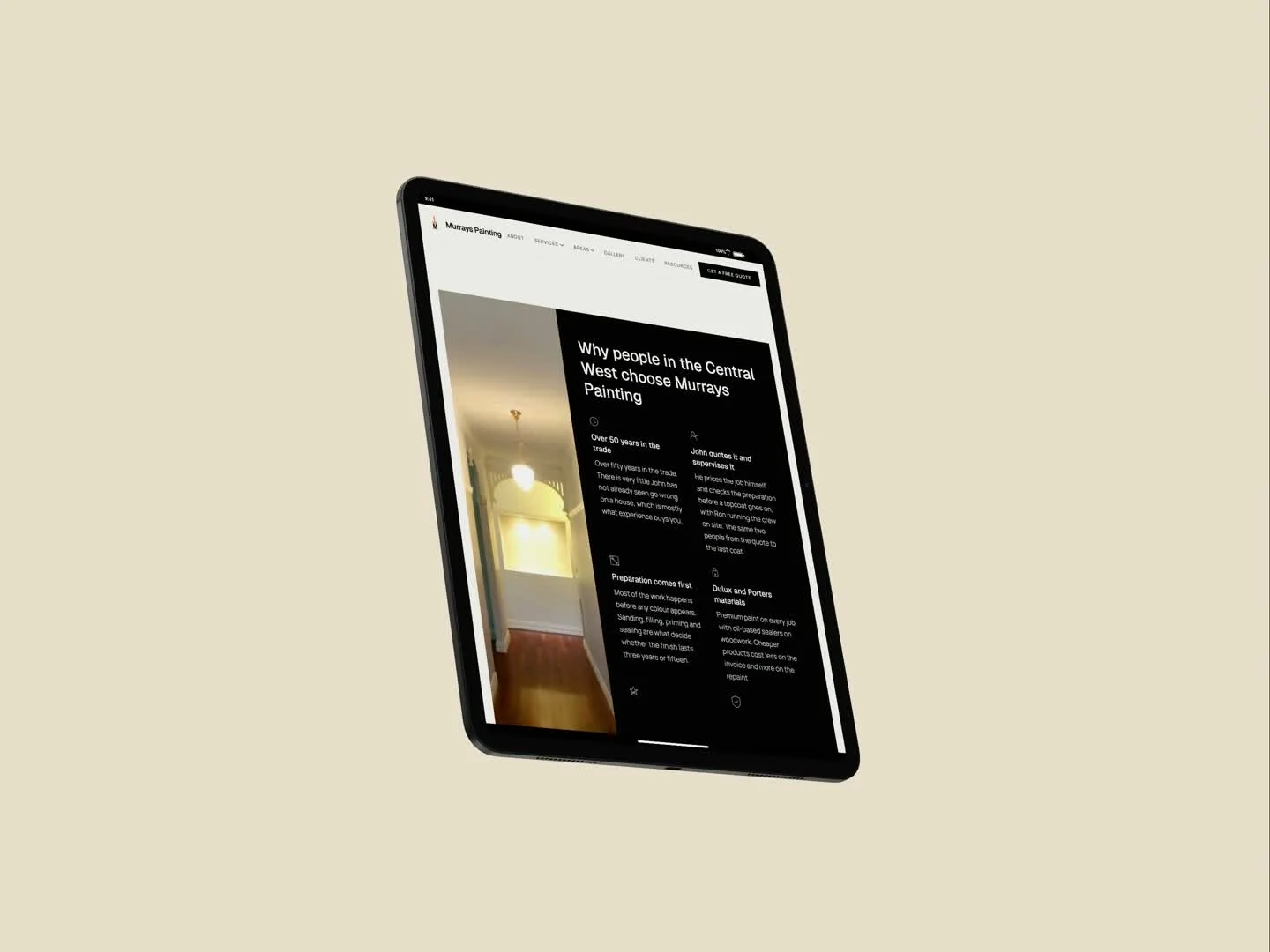
The project
John Murray has painted in Orange and across Central West NSW for more than fifty years. The reputation is local and deep; the online presence was close to nothing. The commercial work in particular, the schools, clubs and heritage buildings, existed only in his memory and a handful of photographs, so we rebuilt that history from archived sources before writing a word of copy.
The strategic decision was to optimise for job size rather than job count. The aim is to attract full repaint enquiries, so the website and search messaging lead with the scale of the job rather than the speed of the quote. Heritage-led keywords were tested, but the search demand we found did not justify making them the focus. A separate landing page was built earlier in the project. The focus is now the main website, where service information, finished work and local context give people more to assess before enquiring.
Find the painting work the business wants to do.
Murray’s website brings service information, completed painting work and local experience into one place. The objective is useful painting enquiries, with particular attention to the scale and suitability of the work rather than the cheapest possible lead.
- Step 01
Connect a painting search to relevant work
Google Ads and organic search introduce the business to people with different painting needs. The main website gives them service detail and completed work to assess, from a commercial repaint to the exterior of a home. The useful question is whether the information answers the job they have in mind.
- Step 02
Make the scale of the job clear
The page needs to help someone recognise the kind of painting work Murray’s takes on. Full repaints need a different conversation from a small touch-up. Relevant project evidence and clear scope help set that expectation before the enquiry.
Search tests should answer a business question
A heritage-focused keyword test revealed limited search demand. The useful response is to reassess that opportunity, rather than keep pursuing a theme because it sounds attractive. For organic improvements, comparable pages left unchanged provide context when reviewing the pages we update.
- Step 03
Keep intent separate from an enquiry
Review recorded enquiry actions separately from page interest. Where form-start and phone-tap events are available, they help investigate the point where interest stalls. A phone tap does not establish that a call connected, and a form start is not a completed lead.
- Step 04
Optimise for the work behind the lead
Enquiry reviews need to include the painting job being requested. If volume increases but the work becomes less suitable, the campaign has not necessarily improved. If suitable visitors abandon the form, the first question is about the page and questions, rather than the audience.
The feedback that matters
Compare confirmed job outcomes with the original enquiry where reliable records are available. That gives future campaign decisions a business context that click totals cannot provide.
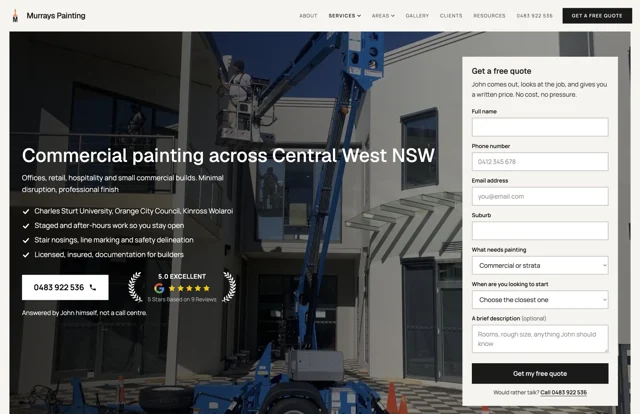
A closer look at the pages
Selected pages showing how the experience comes together.
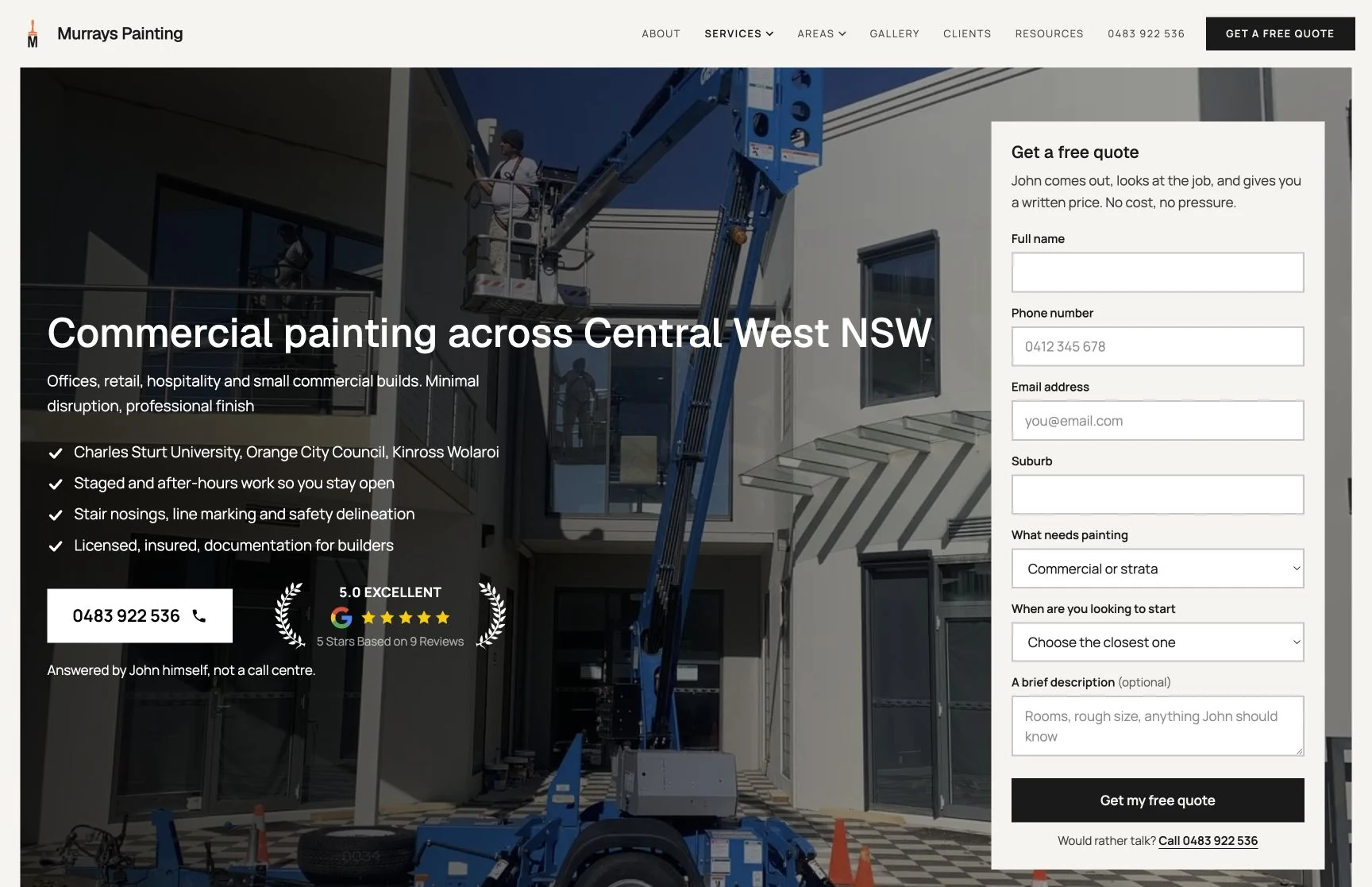
Commercial painting
A destination framed around larger painting work.
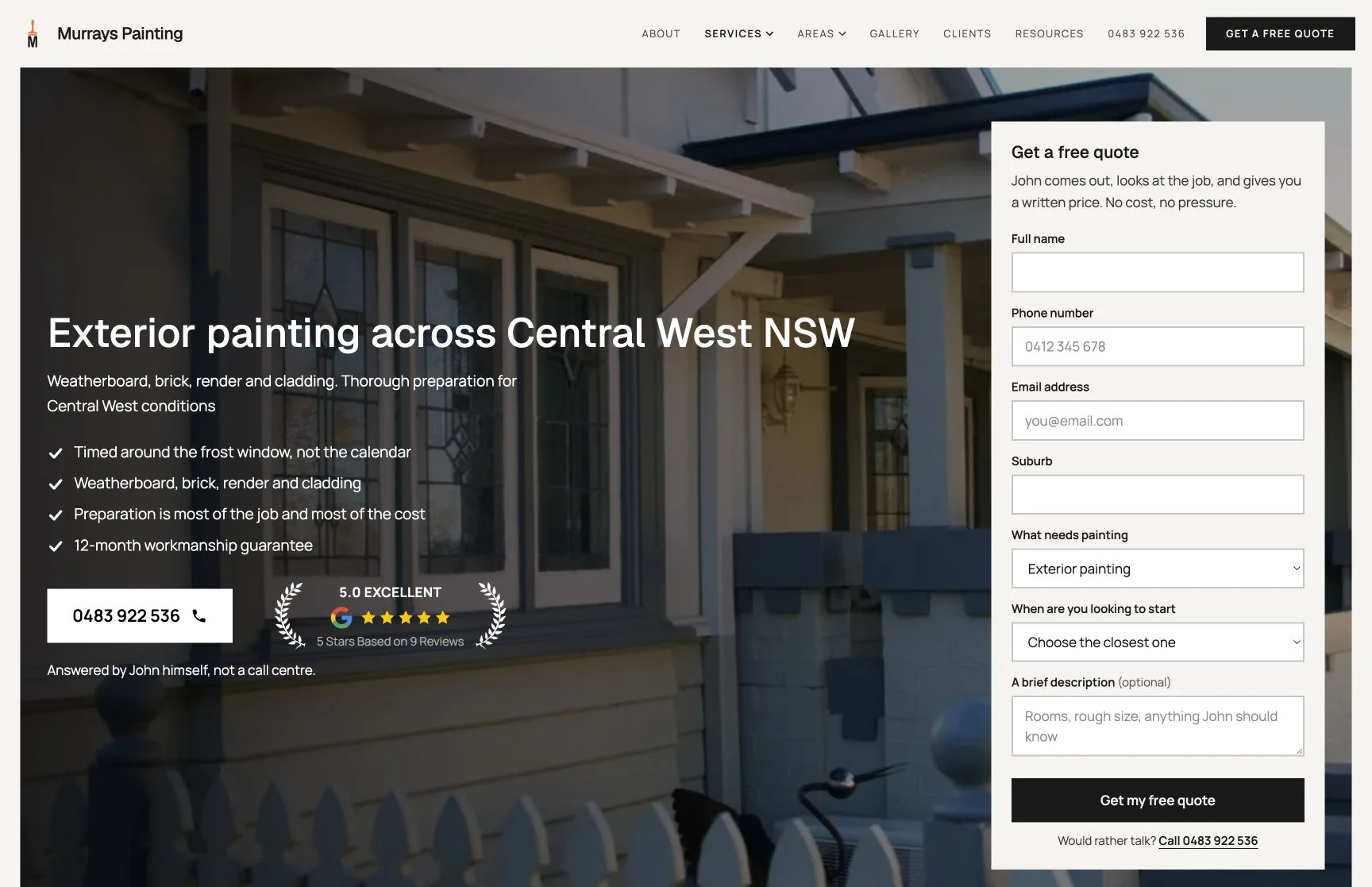
Exterior painting
Service-specific information beside the quote form.
Under the hood
The main Next.js website is fully indexable, with per-route metadata, canonical handling and location pages. The earlier landing-page build remains separate and excluded from search, but is no longer the focus of the enquiry journey. Search Console data is pulled programmatically and measured against untouched area pages as a control, which helps distinguish broader search movement from changes on the pages being worked on.
Fifty years of work that lived in one man's memory is written down now, indexed and searchable. Optimising for job size rather than job count takes longer to read than a lead count does, which is exactly why the untouched area pages are kept as a control and the Search Console data gets pulled rather than guessed at.