

Plenty of people who market to trade and construction businesses have a blueprint. The blueprint for a seven-figure construction business. The playbook for a million-dollar trade business. Half of the ones we looked at require your phone number before you can read them, and some want your revenue and your trade as well (our review of eight, 6 Oct 2026) 54. What you get back is usually a PDF with maybe 20% of the strategy and a booking link for the rest.
So rather than make you hand over your information to get a slice of the strategy, here's the whole thing. In an article. You don't have to give me any of your details to read it, and nothing further down is held back for a call.
It works for a business of any size, from one person with a ute to three crews and an office. The advice changes as the business grows, so it's split by stage, and you can jump straight to yours. And if you're small, I'm not going to tell you to go and spend money on ads. You'll see why in the first section.
Why give it away? Because I'd like more Australian trade businesses to have it. With the direction the economy's going, the ones that last will have a system underneath them, and a lot of families rely on those businesses lasting.
The checklists, worksheets and calculators on this page run in your browser. Nothing you type or tick is sent anywhere, and your ticks are saved on your own device. Lead capture and follow-up are written up in full in the Foundational Marketing Blueprint; this page covers the business around them. Every figure has its source and date next to it. Where something is my opinion rather than a finding, I'll say so.
- SmallYou're the sales team, the scheduler and the bookkeeper.Roughly under $200,000 a yearSection 2 ↓
- Six figuresYou're busy, but nobody remembers your name.Roughly $200,000 to $1 millionSection 3 ↓
- Seven figuresYou've got a lot right, but you're one of five quotes that look the same.$1 million and upSection 4 ↓
Our bands, not an official classification. Sections 1 and 5 to 11 apply to everyone.
1The system comes before the spend
If you take one idea from this page, take this one.
Every dollar you spend on advertising lands on a system. There's somewhere the enquiry goes. Someone replies to it, quickly or slowly. There's a way to follow up when the person goes quiet, or there isn't. And there's a way to tell which dollar did the work, or you're guessing.
When those pieces are missing, more ad spend means more waste. The ads get blamed, the business owner decides "Facebook doesn't work for us", and the real problem was that leads were landing in a personal inbox and getting a reply three days later. We've written about this separately in why ads stop working for trade businesses, and the short version is that it's almost never the ads. When we audited 31 trade businesses, the problems sat further down too.
So the rule is simple. Make sure you have the system in place so that every single dollar works harder. Then spend.
Here's the whole system on one page. Every box links to the section that covers it.
- People who don't know you yetMost of next year's customers aren't looking todaySection 3
- They see youBrand, reach ads, word of mouthSection 3Section 5
- They search or clickGoogle, Meta, your websiteSection 5Section 9Didn't enquire?Retargeting on Google and Meta brings them back here.Section 5
- Enquiry lands in one placeCalls, texts, forms, messagesSection 2Section 7
- Fast reply and follow-upAn instant text holds them while you finish the jobSection 6
- Site visit and quoteSame day, from your phoneSection 7Section 8
- Won jobSomeone owns it, and the next step has a dateSection 7
- Review and referralAnd the loop starts againSection 6
The blue line is the loop: every review and referral puts you in front of someone new. The dashed box is where people leave, and how you get them back.
Before you spend a dollar, walk it backwards. Start with the extra jobs you want a month. If you win one in four quotes, two more jobs means eight more quotes, and more enquiries than that. Then ask what an enquiry costs you, and whether you can actually reply to that many. Most people skip that last question.
The calculator below does the arithmetic with your numbers, not ours.
Ad spend to jobs
Of enquiries that become jobs
Fill in the four boxes and the working shows here.
2Small: you are the business
Most trade businesses in Australia are this size, so if this is you, you're in good company. In June 2025, 60% of Australian construction businesses had no employees and 32% had one to four (Australian Bureau of Statistics, Counts of Australian Businesses, released 16 Dec 2025, our calculation from its tables) 2. About 53% turned over less than $200,000 in 2024-25 (same release) 3.
Of construction businesses operating in June 2022, 59.6% were still operating in June 2026, against 61.9% for all industries (Australian Bureau of Statistics, released 18 Aug 2026) 1. So not "most fail in year one", but about four in ten were gone within four years.
At this size, the constraint is your time, then cash flow. You're quoting at night and answering the phone from a roof. An hour saved each week is worth more than another enquiry you won't have time to answer.
So here's what I'd set up before spending a cent on ads.
One place every enquiry lands. Calls, texts, forms, Facebook messages. Spread across four apps, some get missed and you won't know which.
An instant reply. A text the moment someone enquires: "Thanks, got your message, I'm on a job and I'll call you this afternoon." It stops them ringing the next number on the list while you're up a ladder. A missed call should trigger the same text.
A quote you can send from your phone. The same day as the visit, if you can. Section 8 covers the tools.
A review request after every job. With a direct link, while the customer is still happy. Google says local ranking comes from relevance, distance and prominence, and prominence includes how many reviews you have (Google Business Profile Help) 55. Our guide to getting more Google reviews has the wording.
A Google Business Profile that's filled in properly. Services, service area, hours, real photos, the right phone number. See local SEO for tradies. More people now ask ChatGPT for a tradie, and what gets you named in those answers is mostly the same groundwork.
A website that tells a stranger who you are. It doesn't need to be big. Section 9 explains why it needs to be decent.
Word of mouth is a channel too, and probably your best one right now. Give happy customers something to pass on: a link, a card, a text they can forward. Most people are happy to refer you. They need a nudge and an easy way to do it.
One rule that saves a lot of money: if the phone already rings more than you can answer, don't buy ads yet. Fix the reply first. More enquiries on top of slow replies is paying to annoy people.
Two thresholds land at this stage for a lot of trades. You must register for GST once your GST turnover reaches $75,000 (ATO, updated 14 Sep 2026) 5. And if you're a QBCC licensee in Queensland, SC1 covers maximum revenue up to $200,000 and SC2 up to $800,000 (QBCC, read 7 Oct 2026) 4. Your licence has a specific maximum revenue amount within that range. You can exceed that amount by up to 10% in a financial year, but a larger increase needs prior QBCC approval and updated financial evidence (same source). Plan the licence step before the work arrives, not after.
For the first automations to set up, see five automations every business needs.
Small-stage checklist
3Six figures: busy, and forgettable
This is the stage I have the strongest opinion about.
You've got work, maybe more than you can handle some months, and a ute with your name on it. And what we see over and over is that the branding is so weak. It's not memorable. You're a service business, and you're not a brand.
Ask a past customer who did their deck and they'll say "the guy with the white ute". They liked you. They'd use you again. They can't remember your name.
That matters more than it sounds, because most of the people who'll hire you in the next two years aren't looking for you today. When they do need you, after a storm or when the house goes on the market, they'll think of whoever comes to mind. Or they'll ask a friend, who has to remember your name too.
What "brand" means here
A brand at this size isn't a logo refresh. It's being recognisable and consistent everywhere a customer meets you, and being linked in people's heads to the moments they need you.
The Ehrenberg-Bass Institute has names for both. Distinctive brand assets are the colours, shapes and phrases people use to spot a brand. Category entry points are what Jenni Romaniuk calls "situations and moments when consumers think of certain products and brands" 6. The Institute's own example is hearing about solar panels at a party 7. The more of those moments your name is linked to, the more often you come to mind when it counts.
None of that research was done on trades, as far as we could find. What follows is our application of it, not a claim the research makes.
Cheap ways to become memorable
None of these need a big budget. They need consistency.
- One colour no local competitor in your trade uses. It only works as yours if nobody nearby has it. Put it on the ute, the shirts, the quote and the Facebook cover.
- The same layout on every vehicle. Trade word large, one phone number, your colour. Every vehicle is a free ad around your service area.
- Uniforms. A shirt or cap in your colour. The customer sees the crew, and so do the neighbours.
- Job site signs. "Another job by [Name]" on the fence, for the neighbour watching.
- A named process. Name your steps and use the same words on site, on the quote and in the ads.
- The same words everywhere. How you answer the phone, your voicemail, your site headline. Pick it once.
One warning. People are bad at judging their own brand. An Ehrenberg-Bass study of more than 400 brand elements, reported by Marketing Week in July 2025, found marketers' judgements of how strong their brand assets were "rarely accurate" 8. You think everyone knows your green ute because you see it every day. So test it. Show ten past customers a photo of your ute with the name covered, next to a competitor's, and ask whose it is. It's not a proper study, but it beats guessing.
Brand versus ads that sell
You'll hear that big brands should put about 60% of their marketing into brand building and 40% into ads that ask for the sale 10. That comes from Les Binet and Peter Field's work on the IPA Effectiveness Databank, "996 campaigns, 700 brands, 83 categories" 9. Their actual conclusion is more useful than the ratio: "Short term effects are vital for efficiency. But long term effects drive growth and profit. You need both." 9
Don't take the 60:40 split and apply it to a six-figure trade business. Those campaigns were mostly large, well-funded and entered for awards, and Binet and Field say themselves that the best mix "varies by category, price point, brand size" 56. Nobody knows the right split for a plumber with a few thousand dollars a month. What I'd say is both matter, and most trades have zero brand.
The order I'd work in at this stage:
- Keep the things that catch people ready to buy: Google Search, your Google Business Profile, reviews, quote follow-up.
- Fix the cheap brand stuff above. It works on every job you already do.
- Add low-cost reach, like a short local video on Meta, once the first two are working (section 5). We pulled apart the trade video ads that run longest, and they have more in common than you'd think.
That's our ordering, worked out from the research, not a ratio taken from it.
If your ads bring in the wrong customers, read you might be advertising for price shoppers. It's often a brand problem dressed up as an ad problem.
What a brand actually covers
Here's what that looks like in practice: three businesses whose social media we look after, shown everywhere a customer meets them. Same colours and the same voice, on Google, on Facebook and on their website.
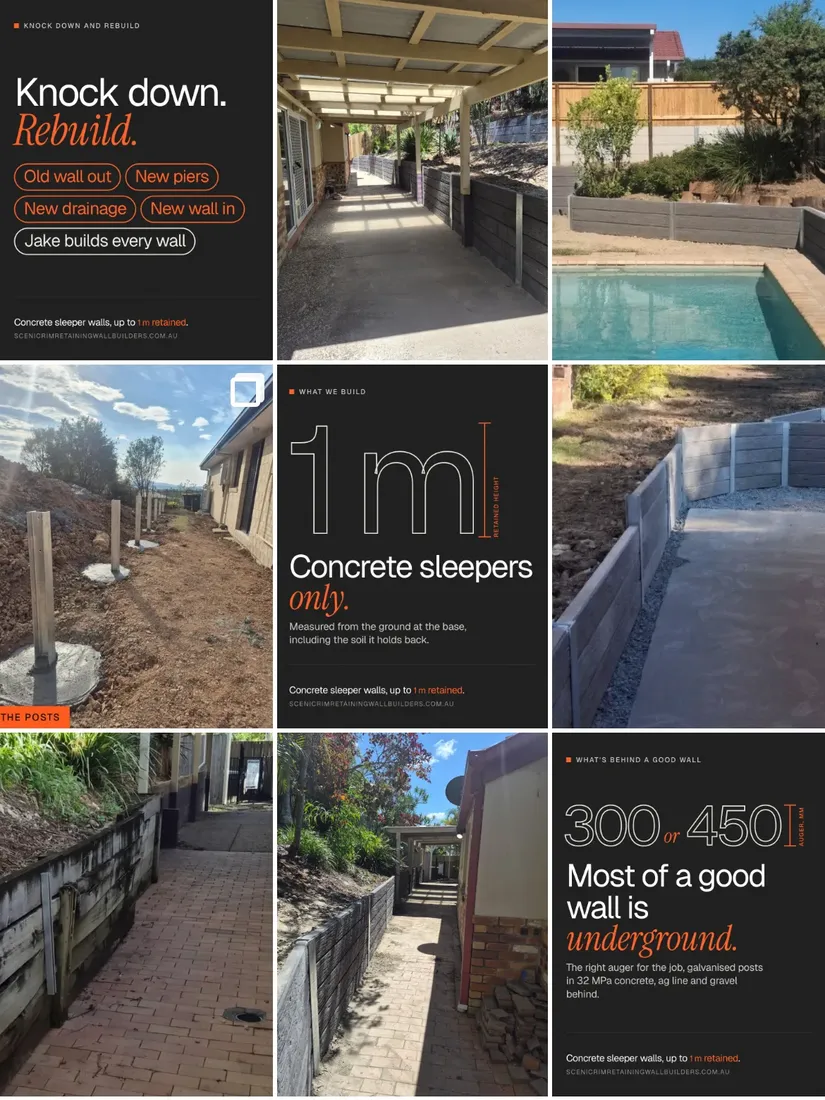
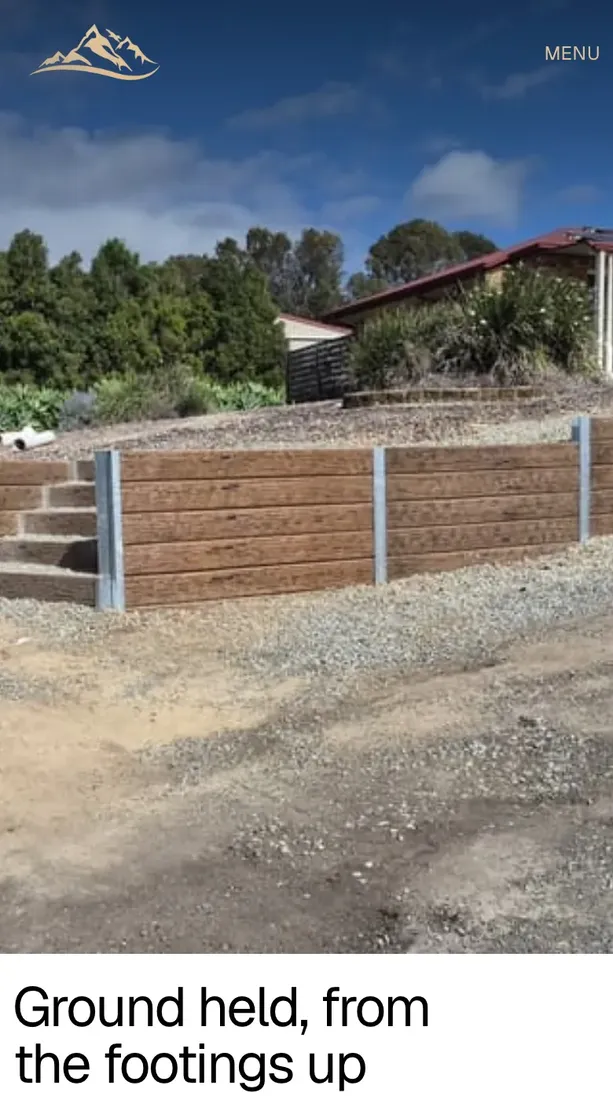
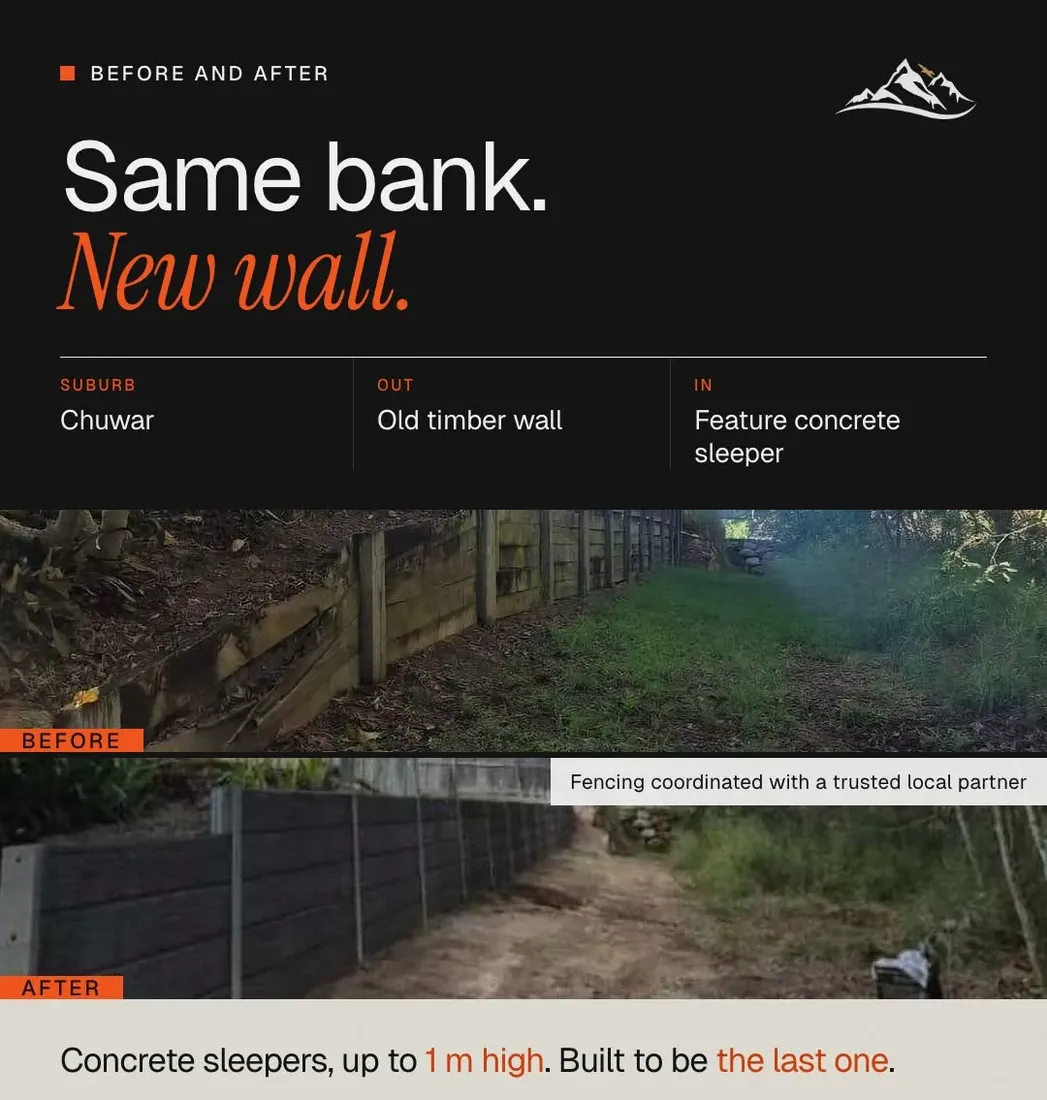
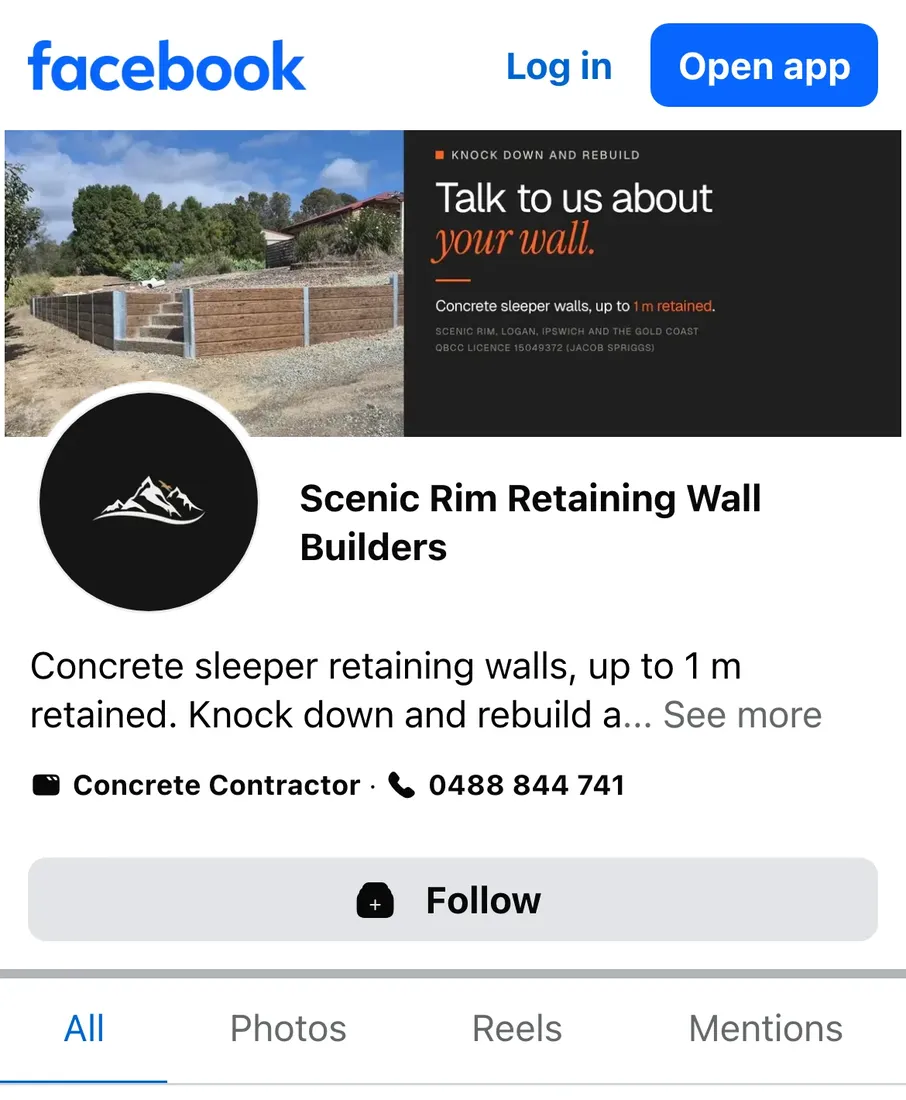
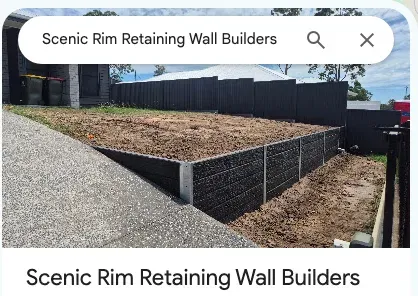
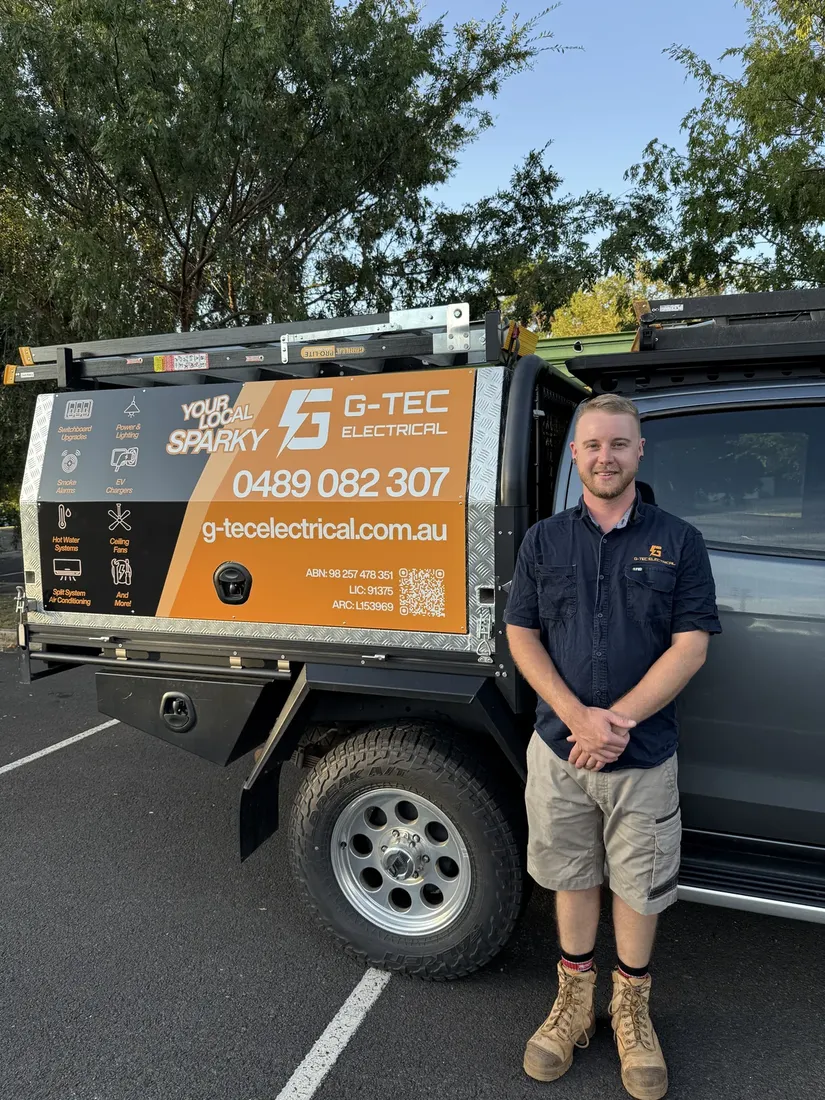

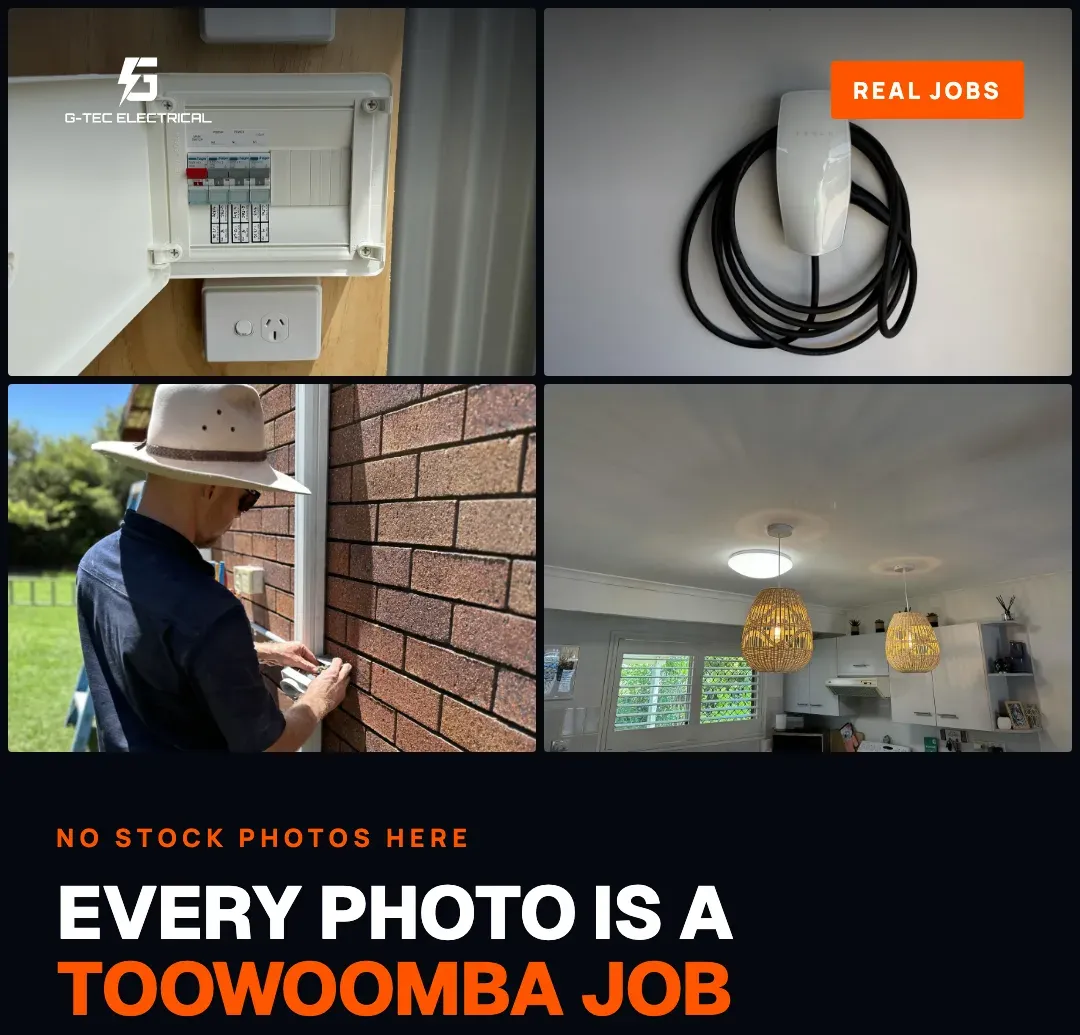
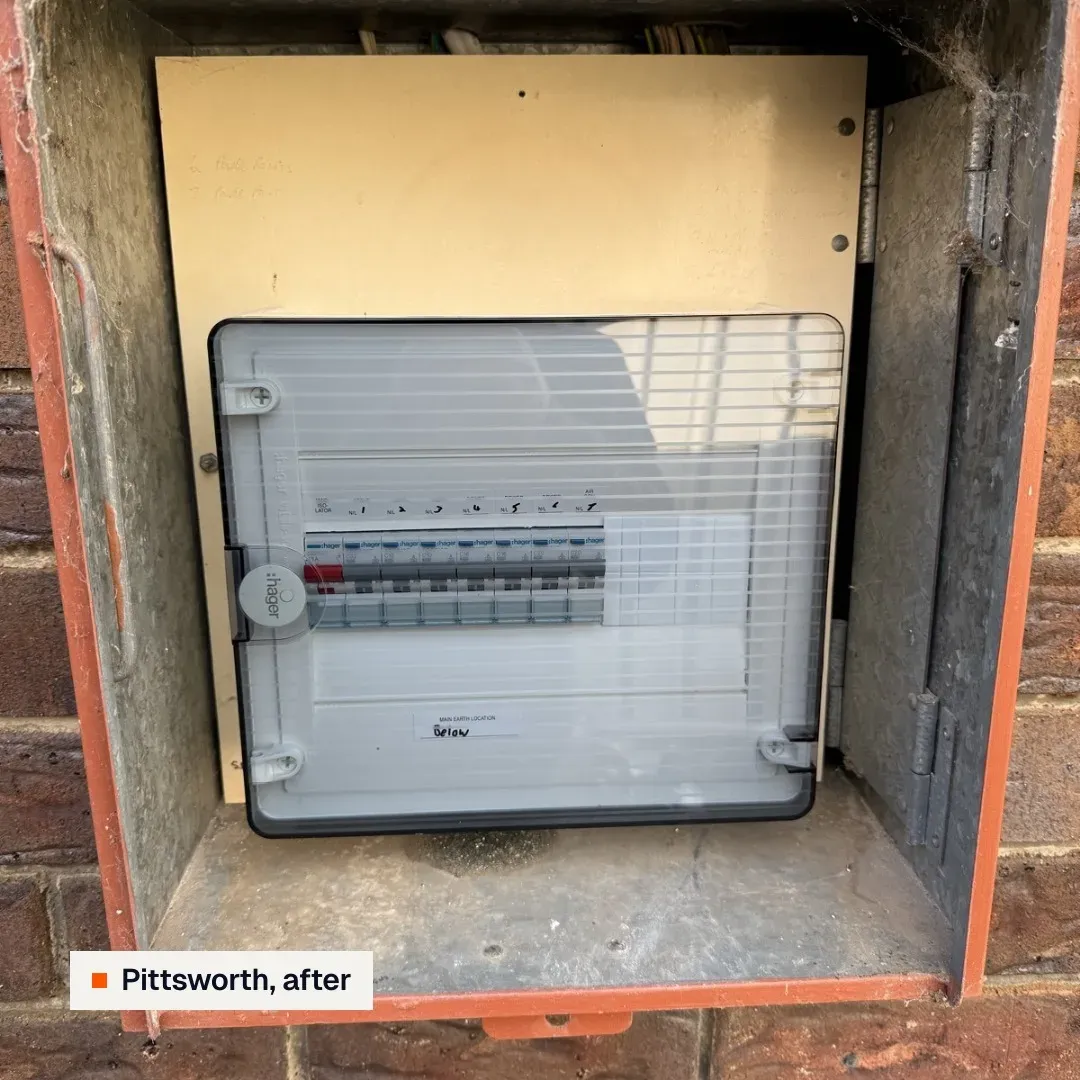

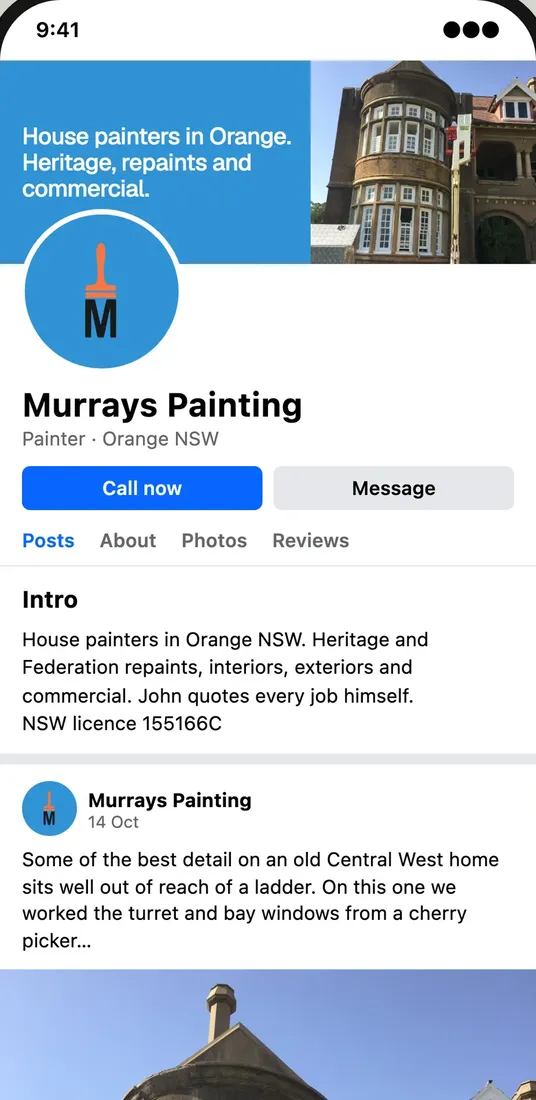

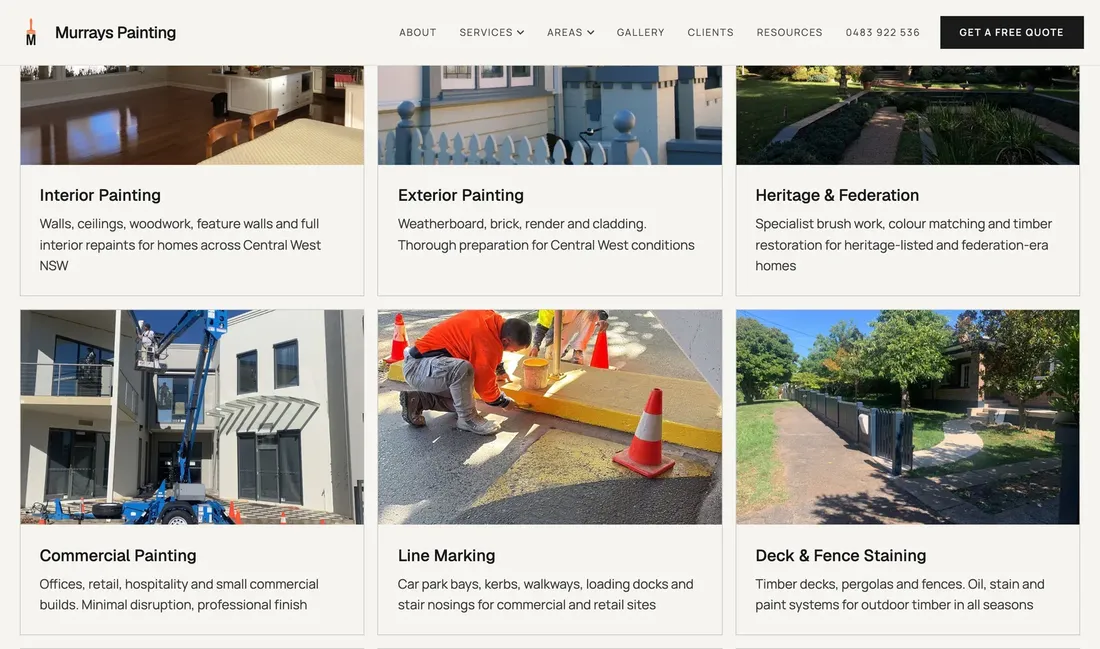


Real screenshots and photos of work we run for these three.
Brand consistency audit
Put these side by side. Do they look like one business?
The situations that make someone call you
Write the 10 situations that make someone need a [your trade]. Then check your website and Google profile mention each one.
4Seven figures: you've got a lot right, now be the obvious choice
At seven figures, the branding's set up, the crews are busy and the phone rings. Only about 9% of Australian construction businesses turned over $2 million or more in 2024-25 3, and about 7% had five to nineteen staff in June 2025 2 (Australian Bureau of Statistics, released 16 Dec 2025, our calculation).
The problem now is different. When a customer gets three to five quotes, yours looks like the others. Same licence, same reviews, same photos of finished decks. So the questions become: how do you differentiate yourself from the market? How do you really target the ideal customer? And what's the psychology behind why they choose?
Differentiate on something they can't honestly print
"Quality workmanship" and "family owned" don't differentiate anyone, because everyone can write them. Look for something a competitor couldn't honestly put on their site. A fixed-price quote with the variation rules written down. A named site supervisor on every job. Progress photos sent to the client every Friday. Whatever it is, it has to be true, and awkward for the next business to copy.
Pick the customer you want more of
ICP stands for ideal customer profile. It's a written description of the customer and the job you want more of. Write yours from evidence, not a wish list: take your 3 to 5 best recent jobs and describe what they had in common.
You'll usually find a pattern: the same kind of customer, the same trigger, the same fear. That tells you where to advertise, what to say and which jobs to stop chasing. If two of your best jobs look nothing alike, you've got two ICPs. Do one page each. If the people who buy from you also resell your work, it gets more complicated.
The psychology, in trade terms
They're buying less risk. A homeowner starts from "my house works and my money's in the bank". Your quote is a possible loss: money, mess, a builder who disappears halfway. Kahneman and Tversky's 1979 paper put it plainly: "losses loom larger than gains" 11. So the strongest things on your quote are whatever shrinks that loss: a fixed price, your licence number, insurance, a written warranty. That's our reading of the theory, not something tested on trades.
Proof that answers the fear they have. Robert Cialdini lists seven principles of persuasion, and a few do most of the work for a trade 12. Social proof: "especially when they are uncertain, people will look to the actions and behaviors of others", which means reviews and before-and-after photos. Authority: licences and insurance. I'd leave scarcity alone. "Only two spots left this month" is easy to fake, and customers can tell.
Fewer, clearer options on a quote. You may have heard of the jam study, where more choice meant fewer sales. A 2010 review of 50 experiments found the average effect was "virtually zero", with big differences between studies (Scheibehenne, Greifeneder and Todd, 2010) 13. I still prefer two or three clearly different options to fourteen line items, but that's a preference, not a law.
Price signals quality. People often read a higher price as a sign of quality when they can't judge it themselves. A 1989 review of 36 studies found that link for consumer products, though newer work disputes parts of it (Rao and Monroe, 1989) 14. Most homeowners can't judge workmanship. Lead with being cheapest and you attract price shoppers, and tell everyone else you might be the risky option.
What they're hiring you for. Clayton Christensen's jobs-to-be-done idea (Harvard Business Review, September 2016) 15 is that people "hire" a product or service to "make progress in specific circumstances" (Christensen Institute) 57. Nobody wants a new switchboard. They want the power to stop tripping. Write about that.
ICP worksheet
Fill this in from your 3 to 5 best recent jobs, not from a wish list. The grey text is a made-up example.
5Reach, then retarget: make every click count twice
There are two kinds of people you're advertising to. Some are searching right now, on Google Search and Maps, where your Google Business Profile and search ads catch them. The others will need you later. They're scrolling Facebook, Instagram and YouTube, and short local video ads make sure your name is the one they remember.
Then there are the people who clicked, looked at your site and left without enquiring. They're the warmest people you'll ever pay to reach, and most businesses let them walk.
How retargeting across Google and Meta works
My rule is this. Make sure that anyone who visits your site from Google will see your Facebook ads. And make sure anyone who interacts with your Google campaign will see a retargeting ad.
This is often explained wrong. Google and Meta don't talk to each other, and no setting links the two ad accounts. What links them is your website.
Put the Meta pixel and the Google tag on every page of your site. Each is a small piece of code that tells the platform who visited. Now, when someone clicks your Google ad and lands on your site, the Meta pixel sees them too, and Meta can show them your Facebook and Instagram ads. It works the other way too.
The limit, said plainly: someone who saw your Google or YouTube ad but didn't click it can't be retargeted on Facebook. They never reached your site, so the Meta pixel never saw them. Each platform only sees its own data plus whatever your website tells it. Google can still retarget YouTube viewers on its own side, through a YouTube audience inside Google Ads.
The details that trip people up
Audiences need enough people. Google needs at least 100 active visitors or users in the last 30 days before a website audience will show ads on Search, Display or YouTube (Google Ads Help, read 6 Oct 2026) 18. Meta recommends waiting until a website audience has several hundred people before using it 17. Install both tags well before you need them.
How long people stay in an audience. Meta website audiences can keep people for 1 to 180 days 16. Google keeps them for 30 days by default and up to 540 18.
Exclude leads and customers. Otherwise you're paying to advertise to people already on your quote list.
Don't let the platform go wide on retargeting. Meta's own help pages recommend testing its automated Advantage+ audience "for almost all campaign types, except retargeting campaigns" 20. Keep retargeting to your own audience, and watch how often each person sees the ad, because small audiences tire of the same ad quickly.
Customer lists are mostly for exclusion. Google only lets you target ads at an uploaded customer list once your account has "90 days of Google Ads history and more than USD $50,000 total lifetime spend" (Google Ads policy, read 6 Oct 2026) 19. Most small trade accounts aren't there, but you can still upload a list to exclude past customers.
Tell Google what happened after the click. Feeding back which enquiries became jobs teaches it to find more of the good ones. See teaching Google what a good customer looks like.
Privacy, briefly
Retargeting isn't banned in Australia. But the OAIC says that for businesses covered by the Privacy Act, "APP 7 will apply to targeted online advertising using an individual's personal information", including through tracking pixels, and people need a simple way to opt out (OAIC guidance, 4 Nov 2024) 21. Most businesses with turnover of $3 million or less aren't covered, with exceptions 22. I wouldn't lean on that. Mention your pixels in your privacy policy and give people an opt-out.
In June 2026 the OAIC found two health businesses, Medmate Australia and Monash IVF, breached the Privacy Act through pixels that revealed health information (OAIC, 24 June 2026) 23. Trade sites can have revealing page addresses too, like a page on mould and your health. Keep sensitive words out of the addresses and event names your pixels send. This is a research summary, not legal advice.
- ReachShort local video on Meta and YouTubeSearchGoogle ads and Google Business ProfileThe limitSaw a Google or YouTube ad but didn't clickMeta can't see them
- You set this upSite visitThe Meta pixel and the Google tag both fire on every page.
- You set this upRetarget on MetaReviews, finished jobs, a reason to enquireYou set this upRetarget on GoogleSearch follow-up and YouTube
- LeadCall, form or message
- You set this upExclude leads and customersFrom prospecting on both platformsWon jobThen a review request and a referral ask, which feeds reach againLoops back to reach ↑
The dotted line is the limit. If they never reach your site, Meta never sees them.
Tracking and retargeting setup checklist
The Foundational Marketing Blueprint has more on what to say in retargeting ads, and our article on Facebook lead form settings covers when a lead form is the right tool. And a Messenger conversation isn't a lead until you've got a phone number.
Contents ↑6Automate every step from enquiry to review
Making sure you have automations for every stage of your client journey is the part almost nobody does properly. Intake, then handoff to whoever quotes, and every step after that.
Start with speed, because most businesses are slower than they think. In 2011, Harvard Business Review published an audit of 2,241 US companies that were sent a test enquiry through their websites. 37% replied within an hour. 23% never replied at all. Among the ones that did reply within 30 days, the average wait was 42 hours (Oldroyd, McElheran and Elkington, HBR, March 2011) 24. A separate study in the same article found firms that tried to contact a lead within an hour were nearly seven times as likely to qualify it, meaning they had a meaningful conversation with a key decision maker, as firms that tried an hour later 24.
That's US data from 15 years ago, about web leads chased by phone, and one author ran a company selling lead-response software. It isn't about tradies. I'd still bet the direction holds, because someone who fills in your form has often filled in two others the same evening.
You can't reply in an hour from a roof. An instant automatic text isn't a human reply, but it holds the lead while you finish the job. "Thanks Sarah, got your enquiry about the deck. I'm on site until 3 and I'll call you after that." Most people will wait for a call they've been told is coming.
Where the lead lands
We've already written the deep dive on this, the Foundational Marketing Blueprint, so here's the short version. Messenger is the weakest place for a lead to land. A Meta lead form needs questions that take some thought, or a lot of people won't answer the phone. A landing page per service, form near the top, is strongest for people who don't know you yet.
One automation at each step
Here are the ten steps most trade jobs go through, with one automation for each. Automate the chasing, not the thinking. The software reminds, sends and flags. A person decides what happens next.
- Intake.
A form, call or ad lead creates the record and a pipeline job, tagged with its source.
- Instant acknowledgement.
Within a minute: we've got it, here's who'll call and when.
- Handoff.
Assigned to whoever quotes, with a notification and a note on what the customer asked for.
- Site visit reminders.
The day before and a couple of hours before. A no-show gets offered a new time.
- Quote follow-up.
A text a few hours after the quote, an email a few days later, then a task for a personal call. It stops the moment they reply.
- Won job onboarding.
When the quote's accepted, a "what to expect" message goes out and the job is created in your job tool.
- Completion and payment.
A thank-you, and a reminder if the invoice isn't paid.
- Review request.
A day or two after completion, a text with your review link.
- Referral or service reminder.
Around the anniversary of the job, a service reminder and a referral ask.
- Lost-lead check-in.
A job lost on timing gets a check-in in three months. A job lost on price gets a different message, or none.
The Spam Act applies to you
The Spam Act 2003 covers marketing texts and emails, and ACMA lists no small-business exemption. Each commercial message needs consent, your business identified, and an unsubscribe you honour within 5 working days (ACMA) 25. ACMA specifically says "'welcome journeys' must comply with the spam rules", and that automatically adding someone to a marketing list because they sent you an enquiry may breach the consent rule 26.
In plain terms, replying to someone who asked for a quote is different from putting them into an ongoing sequence. Review requests, referral asks, service reminders and lost-lead check-ins are likely to count as commercial. Put a consent tick box on your enquiry form, keep the record, and include your business name and an opt-out in each of those messages. Keep booking confirmations separate from anything promotional. ACMA doesn't say exactly where a quote reply falls, so if you're unsure, ask them or a lawyer.
- 01IntakeRecord and pipeline job created, tagged with its source
- 02Instant acknowledgementText and email within a minute: who'll call, and when
- 03HandoffAssigned to whoever quotes, with a note on what they asked for
- 04Site visitReminders the day before and a couple of hours before
- 05Quote follow-upText, then email, then a call task. Stops when they replySpam Act if promotional
- 06Won"What to expect" message, job created in your job tool
- 07Completion and paymentThank-you, and a reminder if the invoice isn't paid
- 08Review requestA text with your review link, a day or two afterSpam Act
- 09Referral or service reminderAround the anniversary of the jobSpam Act
- 10, if lost at 05Lost-lead check-inLost on timing: check in at three months. Lost on price: a different message, or noneSpam Act
Blue is the automation at each step. Spam Act flags need consent, your business name and an unsubscribe. Automate the chasing, not the thinking.
Automation checklist
- Intake: a form, call or ad lead creates the record and a pipeline job, tagged with its source
- Instant acknowledgement within a minute
- Handoff to whoever quotes, with a note on what they asked for
- Site visit reminders, and a new time offered to a no-show
- Quote follow-up that stops the moment they replySpam Act if promotional
- Won job onboarding message
- Completion thank-you and payment reminder
- Review requestSpam Act
- Referral or service reminderSpam Act
- Lost-lead check-inSpam Act
How much is a slow reply costing you? There's no reliable figure for trades, so the calculator below doesn't pretend to have one. You set the loss.
What a slow reply costs
Your estimate
Your estimate
Fill in the five boxes and the working shows here.
For the first few to set up, see five automations every business needs. If your Facebook leads aren't picking up, the lead form settings that decide whether your leads are real explains why.
Contents ↑7One system everybody uses
Whether it's a sales team or you, your partner and someone in the office, everyone needs to be working in the same system, so you can keep track of everything.
That means somewhere with internal comments you can share with each other. People can tag each other on issues and conversations. And you have a pipeline that's managed, where people move each job along as it happens.
Internal comments. A note on the customer's record only your team can see. "Rang twice, she prefers texts." When the note lives on the record, anyone can pick up the job. When it lives in your head, nobody can.
@mentions. Typing @ and a name pings that person. "@Dave can you check the access before Thursday?" It replaces the text that gets buried.
Tags. Short labels for where the lead came from and what kind of job it is. Where the job is up to belongs in the pipeline.
One owner per job. Every enquiry has one named person responsible. If two people own it, nobody does.
Every serious tool does these. HubSpot has @mentions on records 52; HighLevel has internal comments inside the customer's message thread 51. The real difference is where the conversation lives: on the deal, in the thread or on the job card. Pick the one where your team already talks.
Pipeline hygiene
A pipeline is the board that shows every open job and the stage it's at. Pipeline hygiene is the habit of keeping it true. An untidy pipeline is worse than none, because people stop trusting it and go back to their notebooks. The rules come mostly from how good sales teams run theirs.
Name each stage after something that happened. "If I can't point to a buyer action, it's not a stage," as one HubSpot sales writer puts it 27. "Quote sent" is a stage. "Warm" isn't.
Every open job has a dated next step. "If there's no dated next step, we downgrade it" 27. No date, no place in an active stage.
Let the tool flag stale jobs. Pipedrive marks a deal as "rotting" after the days you set 49, and HighLevel can trigger an automation 50.
Review it weekly, on the live board. HubSpot's writer books 25 minutes a week 27. Salesforce suggests two reviews a month of no more than 30 minutes, focused on the week ahead 28.
Our suggested setup. Tune the times to your trade.
- Enquiry receivedMoves here whenA form, call, message or ad lead arrivesStale after1 day
- ContactedMoves here whenYou've had a real two-way conversationStale after3 days
- Site visit bookedMoves here whenA date and time are confirmedStale afterThe day after the visit, if not moved
- Quote sentMoves here whenThe written quote is deliveredStale after3 days with no reply
- Follow-upMoves here whenThey have the quote, no decision yetStale after7 days
- WonMoves here whenQuote accepted or deposit paid
- LostMoves here whenDeclined, no response after the agreed chase, or not a fit
Pipeline hygiene checklist
8Which CRM? The one you'll actually use
A CRM (customer relationship manager) is the software that holds your customers, enquiries and pipeline. People spend weeks comparing them. My honest view: the best CRM is the one that you actually use. A simple tool everyone opens every day beats a powerful one only the office manager understands. The options aren't all the same kind of thing, though, so here's a fair map.
Three kinds of tool
Sales CRMs hold contacts, deals, the pipeline and tasks, but don't schedule crews. HubSpot, Zoho and Pipedrive.
All-in-one marketing CRMs add forms, calendars, texting, automations and review requests. HighLevel is the main one.
Job management tools handle quoting, scheduling, invoicing and the accounting sync, with a mobile app for the crew. ServiceM8, Tradify, Simpro, Fergus, AroFlo, Jobber and Buildxact.
A lot of trades end up running one job tool and one CRM, connected. The CRM wins the job: ads, enquiries, follow-up, reviews. The job tool runs the job: quote, schedule, invoice, Xero or MYOB. If you do that, decide which one is the master record for customer details, or you'll end up keeping two address books. And check who owns the account and the data if you part ways.
What matters for an Australian trade business
Texting Australian numbers. HubSpot's own help docs say its native SMS uses US-based numbers and can contact the US and Canada only, not Australia 29. Pipedrive has no native SMS and relies on add-on apps 30. HighLevel and ServiceM8 both text natively. If you follow up by text, and most trades do, check this first.
Xero or MYOB, and a mobile app. The job tool usually creates the invoice, so its accounting link matters most. And if it's painful on a phone, it won't get used.
Where your data is stored. HubSpot has an Australian data centre for new paid accounts, but free accounts are placed in the US 31. Zoho has Sydney and Melbourne data centres 32. Pipedrive announced a Sydney data centre in May 2026 33. HighLevel's core product infrastructure is US-hosted. Separately, WordPress sites hosted through HighLevel can be provisioned in Sydney 34.
Here's a fair note on each. No prices, because they change. Free plan and trial details were checked on 7 October 2026 53. One disclosure: we use HighLevel, so weigh what I say about it with that in mind.
12 tools
| Tool | Kind | Native texting to AU numbers | Job scheduling | Free plan | Suits |
|---|---|---|---|---|---|
| HubSpot | Sales CRM | No native AU | No | Yes | 2 to 10+, long sales cycles |
| Zoho CRM / Bigin | Sales CRM | Add-on | No | Yes | Solo (Bigin) to 2 to 10 |
| Pipedrive | Sales CRM | Add-on | No | No | Small to mid teams |
| HighLevel | All-in-one marketing CRM | Yes | No | No | Solo to 10+, with someone to build it |
| ServiceM8 | Job management | Yes | Yes | Yes, job-limited | Solo to about 20, lots of small jobs |
| Tradify | Job management | Add-on | Yes | No | Solo to small teams |
| Simpro | Job management | Add-on | Yes | No | About 5 to 200, commercial work |
| Fergus | Job management | Check | Yes | No | Solo to mid-sized teams |
| AroFlo | Job management | Check | Yes | No | 5 to 40+, compliance-heavy |
| Jobber | Job management | Check | Yes | No | Small home-service crews |
| Buildxact | Estimating and job management for builders | Check | Yes | No | Residential builders and renovators |
| monday CRM | Flexible work-management CRM | Add-on | No | No | Teams already on monday |
Checked 6 October 2026. 'Check' means we couldn't confirm it from the vendor's own pages. Plans change, so look before you sign up.
- HubSpot (pricing). Free CRM. Strong sales CRM with good collaboration. The sticking point is texting: its native SMS can't contact Australian numbers.
- Zoho CRM (pricing) and Zoho Bigin (pricing). Free editions. A lot of CRM for little money, but it takes setting up. Bigin is the lighter option for solo operators.
- Pipedrive (pricing). 14-day trial. The cleanest single sales pipeline, and it nags you about stale deals. Suits a business whose bottleneck is chasing quotes.
- HighLevel (pricing). 14-day trial. All-in-one for the front half, from ad lead to review request, with texting built in. Not a job tool, its core product infrastructure is US-hosted, and someone has to build it.
- ServiceM8 (pricing). Job-limited free plan. Australian-built and very good at quote, schedule, invoice for small teams, with texting. Often paired with a CRM.
- Tradify (pricing). 14-day trial. Simple quoting and invoicing for small teams, with Xero and MYOB.
- Simpro (pricing). Demo first. Built for commercial and project trades that need job costing.
- Fergus. 14-day trial. Quote to invoice with a clean mobile app and local support.
- AroFlo. Demo only. Australian, and strong on compliance paperwork and inventory.
- Jobber. Free trial. Polished for small home-service crews, but built for North America first, so check MYOB support and support hours.
- Buildxact. 14-day trial. For residential builders, with estimating at the centre, where the margin is won or lost.
- monday CRM (pricing). 14-day trial. Worth a look if your team already uses monday.
9Your website: trust, before they ring
When I first started, I'd have told you any website was better than no website. That's only true to a point.
Having a bad website can do you more harm than good. Someone looks at it and thinks, this business doesn't have it together. And there's no way they're going to trust you with any serious money above a certain amount.
That's my view, from what we see. I'll be straight about the evidence. No study we could find compares a poor website with having none, and nothing ties the effect to job size. What the research does show is the pieces underneath it.
In a 2006 study, ratings of a web page's visual appeal made after 50 milliseconds closely matched ratings made after 500 milliseconds (Lindgaard and colleagues, 2006) 35. That's about looks, not trust, but looks are where trust starts.
In a Stanford study of 2,684 people in 2002, 46.1% of the comments about why a site was or wasn't credible were about its design look, more than anything else (Fogg and colleagues, 2003) 36. That's comments, not people, on mostly large US sites.
And people look at your site after they've read your reviews. In a 2026 survey of 1,002 US consumers, 54% said they would visit a business's website after reading positive reviews, up from 32% in 2019 (BrightLocal, Feb 2026) 37. It's US data. We couldn't find a current Australian equivalent.
Put those together. For a $500 repair, a dated website barely matters. The customer wants someone today. For a $50,000 renovation, a site that looks neglected adds doubt at the exact moment someone's deciding whether to trust you with serious money.
Google says much the same about its own search results. Of experience, expertise, authoritativeness and trustworthiness, "trust is most important" (Google Search Central, updated 5 Oct 2026) 39.
Speed matters too. Google's 2016 study of mobile publisher sites found 53% of visits were likely to be abandoned if a page took more than three seconds to load (Google, Sept 2016) 38. That's a decade old and about publisher sites, not trades, but the point holds: a slow site on a phone loses people before they see anything. See why your website is slow.
The basics are in the checklist below. If you're deciding between a template and a custom build, we've compared them in template websites vs custom built, and what a website costs in Australia covers the money side. What the site's built on matters less than who keeps it updated, but Next.js vs WordPress covers that choice.
A weak site also costs you the jobs you were never asked to quote: the people who looked, doubted and rang someone else.
Website trust checklist
Open your site on your phone and tick what's true.
10Hiring: people, at the right time, with systems
This is my view, not a finding: hiring people before you need to is one of the biggest killers of trade businesses I see. A VA, an office manager, a second crew, taken on because the business felt busy for a month, then carried through a quiet patch with a wage bill that doesn't stop.
No study I could find counts "hired too early" as a cause of failure. The data does show where failure starts. In 2024-25, liquidators named inadequate cash flow or high cash use as a cause in 56% of construction company failures, and poor financial control in 40% (ASIC, released Dec 2025; more than one cause can be named) 40. Construction is also the biggest single industry for company insolvencies: 3,472 construction companies entered external administration in 2025-26, about a quarter of all company insolvencies (ASIC, released 6 Oct 2026, provisional) 41. Running out of cash is the reason liquidators give most. A wage bill you can't cover is one of the fastest ways to run out of it. That second sentence is my reasoning, not ASIC's.
What a first hire really costs
More than the wage. Here's a worked example for a full-time admin person in Queensland in 2026-27, on the Clerks award at Level 1, Year 1, which is $26.97 an hour (Fair Work, rates from 1 July 2026) 46:
- Wage, 38 hours a week: about $53,300 a year.
- Super at 12% (ATO) 42: about $6,400.
- WorkCover: depends on your industry rate. For 2026-27 it's $1.727 per $100 of wages for electrical services, $2.897 for plumbing and $7.449 for carpentry (WorkCover Queensland gazette, 26 June 2026) 45. On this wage, from about $900 to about $4,000, before any claims adjustment.
- Payroll tax: nothing until total wages pass $1.3 million a year in Queensland (QRO) 44. A later problem, not a first-hire one.
That comes to roughly $60,000 to $64,000 a year, before leave loading, equipment, software, recruitment and the time it takes you to train them. And since Payday Super started on 1 July 2026, super has to reach the employee's fund within 7 business days of each payday, not quarterly (ATO) 43. It leaves your account every pay run.
Check with WorkCover which rate applies to office staff in your business. It may be your main trade's rate rather than an office rate.
Software gives you scale earlier
My view: we live in an age of software that isn't designed to replace people. It's designed to give you scale at an earlier stage than was previously possible.
Treasury's research points the same way. Treasury found that between 2015 and 2017, small businesses that sped up their technology adoption grew revenue 3.5 percentage points and employment 5.2 percentage points a year faster than other small businesses (Treasury, Working Future, Sept 2023) 47. Note the second number. Faster adoption was linked with hiring more people, not fewer. And most aren't there yet: only one in ten Australian businesses actively collected or analysed data to make decisions in 2024-25 (Australian Bureau of Statistics, released 25 June 2026) 48.
So the order I'd suggest is software first, for the repeatable stuff: replying, chasing quotes, reminders, review requests, invoicing. Then, when the business can carry it, hire.
Then hire, and teach them the system
You absolutely should still hire people. One good person can do far more than you could on your own, or with your partner. The point is to hire when the work is there, and then teach them the system so they can be self-sufficient.
A new hire who walks into one place for every enquiry, a clear pipeline and notes on every customer can be useful in week one. One who walks into your memory and a pile of texts takes months, and leans on you the whole time.
On virtual assistants: plenty of trades use offshore VAs, but there's no reliable national data on it. Treat it as an option, not a trend you're missing. A VA with a system to work in is useful. Without one, it's another person asking you questions.
The same goes for help from outside the business. Check how anyone you bring in is paid, because it shapes the advice. A percentage of your ad spend rewards spending more. A fixed bundle has to fit a dentist and a builder alike. A guaranteed number of leads is a different product, not a worse one.
Hire or automate first?
A task is eating your time.
Is it the same steps every time?
See the whole map
- Is it the same steps every time?
- Yes: can software do it?
- Yes: automate it first.
- No: go to the hours question below.
- No: go to the hours question below.
- Yes: can software do it?
- Is it taking more than about 10 hours a week of your time?
- No: wait. Keep doing it and review in 3 months.
- Yes: could the business carry the full cost of a hire for 6 months if work went quiet?
- Yes: hire, and teach them the system.
- No: wait, or use a contractor or part-time help.
Admin hours and first-hire cost
Time you could get back
Hours a week you spend on:
What a first hire costs
Full-time admin, Queensland, 2026-27.
Clerks award Level 1, Year 1, from 1 July 2026. Change it.
Full time
Super guarantee rate (ATO)
Queensland 2026-27 industry rates
Before leave loading, equipment, software, recruitment and training.
11The whole system on one page
Here's every checklist from this article in one place, grouped by section, so you can see your gaps at a glance. Print it, stick it on the wall, and work through it a few boxes at a time.
Master checklist
Small stage0 of 11
Brand0 of 11
Tracking and retargeting0 of 8
Automations0 of 10
Pipeline0 of 12
Website0 of 12
12What we do, and an open offer
You can do all of this yourself. That's why it's written down. Pick your stage and start with its checklist.
If you'd rather someone set it up and ran it with you, that's what we do. We set up the whole marketing system from start to finish: website, CRM and pipeline, automations, tracking, and ads on Google and Meta. We look after your social media too. And we don't give you a system and forget about you. We don't run your ads and forget about you either. If you're wondering what ongoing work covers, here's ours, opened up.
Here's the open offer. For businesses we'd like to work with, we build mock-ups of what all of this would look like for them: their website, their pipeline, their follow-up, laid out for their trade. If you want to see all of this for your business before you've paid anyone, reach out, and we'll put it together. There's no obligation. We'd like to get to know you and your business first, and it's why we do the work before there's a call.
Here's some of our work. First, the three businesses whose social media we look after. Then sites for current clients. Then concepts we built for businesses before they'd paid anyone.
The three whose social media we run
Website, social, ads and Google profile, all one business.

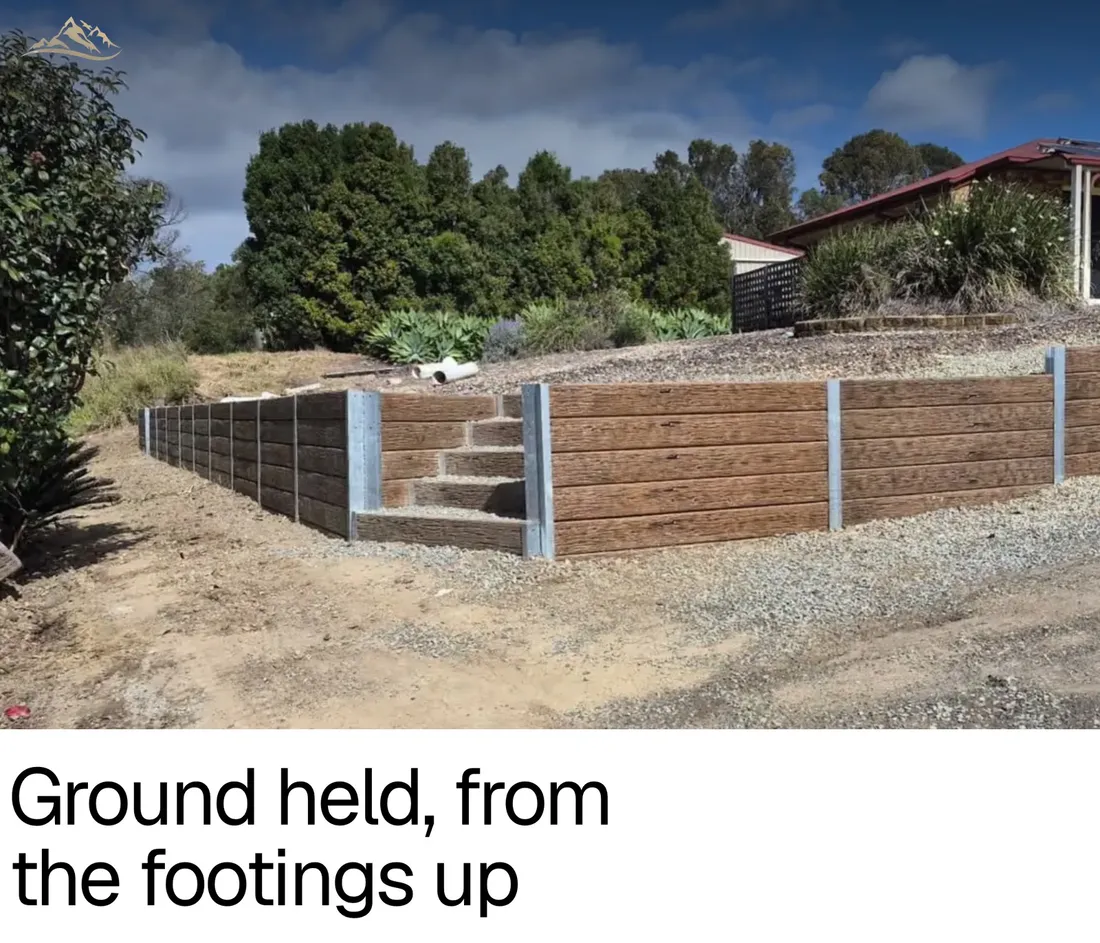 Scenic Rim Retaining Wall BuildersRetaining walls, Scenic Rim to the Gold Coast
 G-TEC ElectricalElectrician, Toowoomba
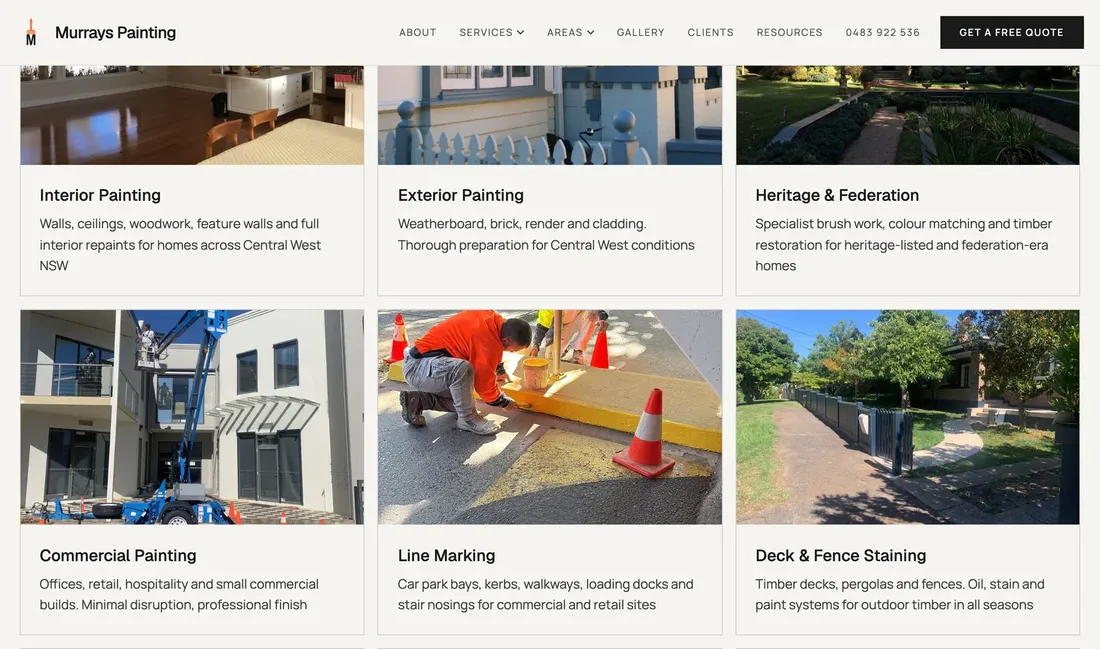 Murrays PaintingHouse painters, Orange NSW
Websites for current clients

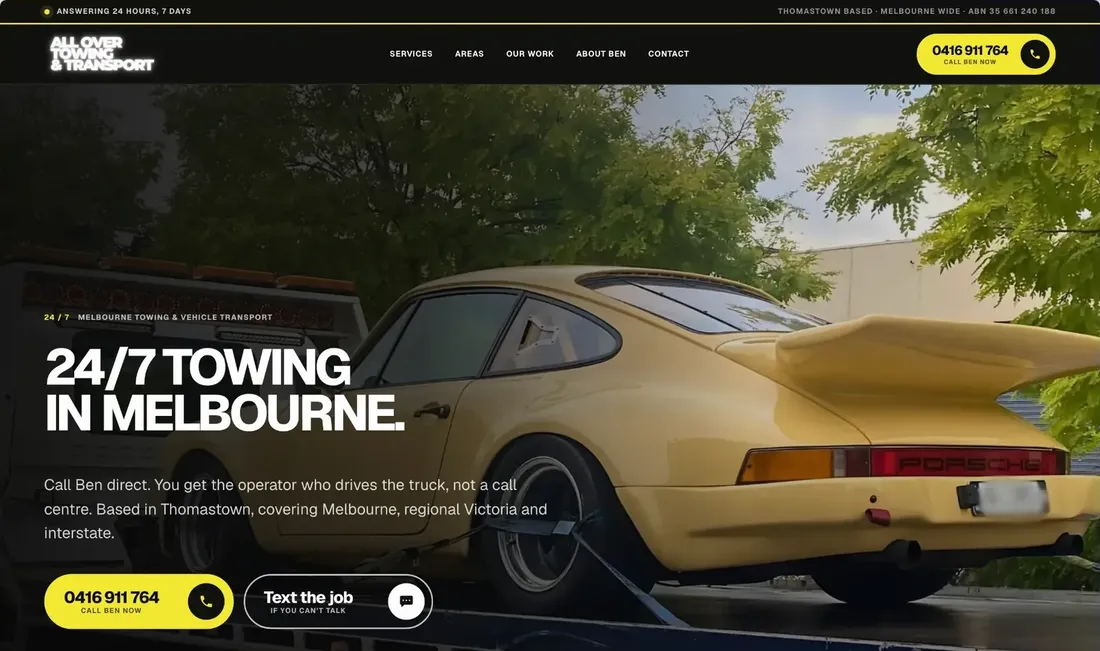 All Over Towing and TransportTowing and vehicle transport, Melbourne
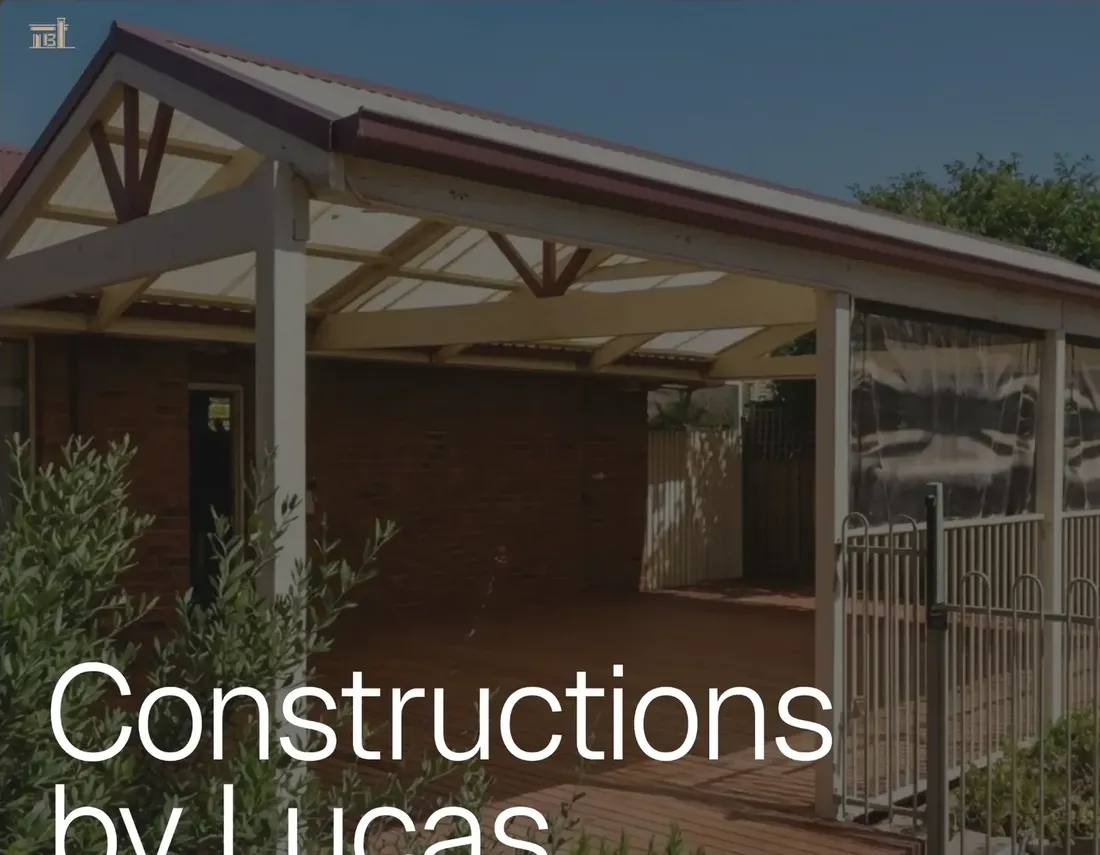 Constructions by LucasCarpentry, Werribee
 Emily Riskas Film and MediaDirector of photography
 Studio SownLandscape architecture, Melbourne
Concepts we built before anyone paid
This is the open offer. Each was built for a business we wanted to work with, before a call.

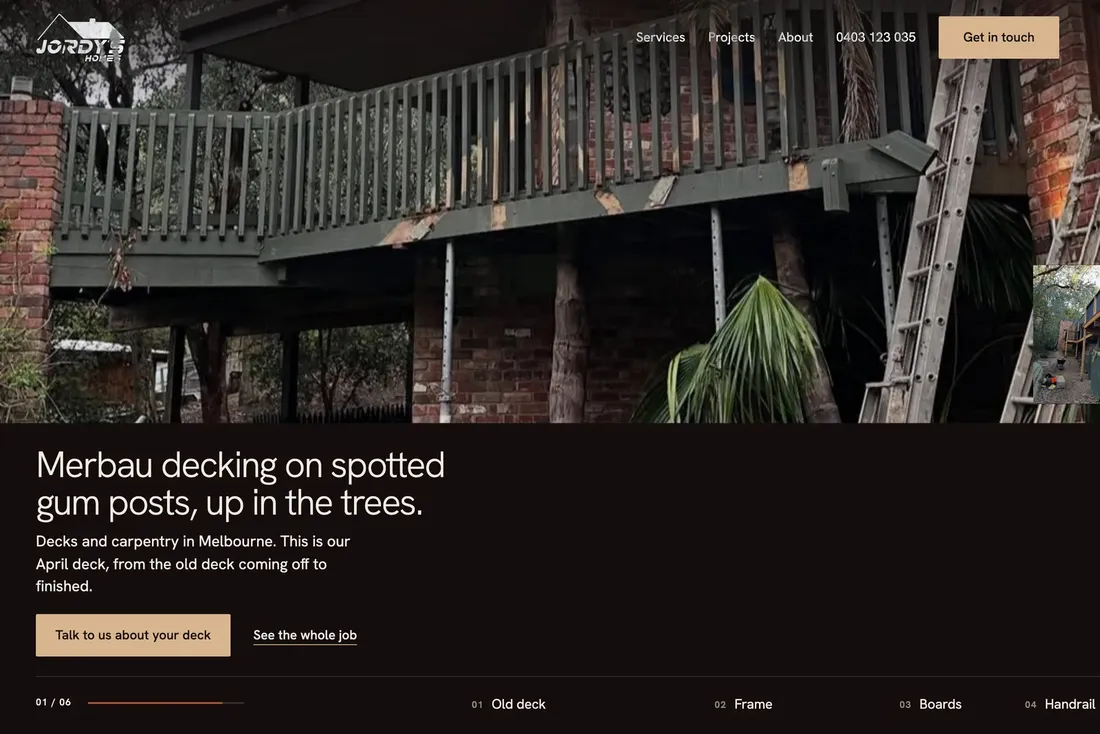

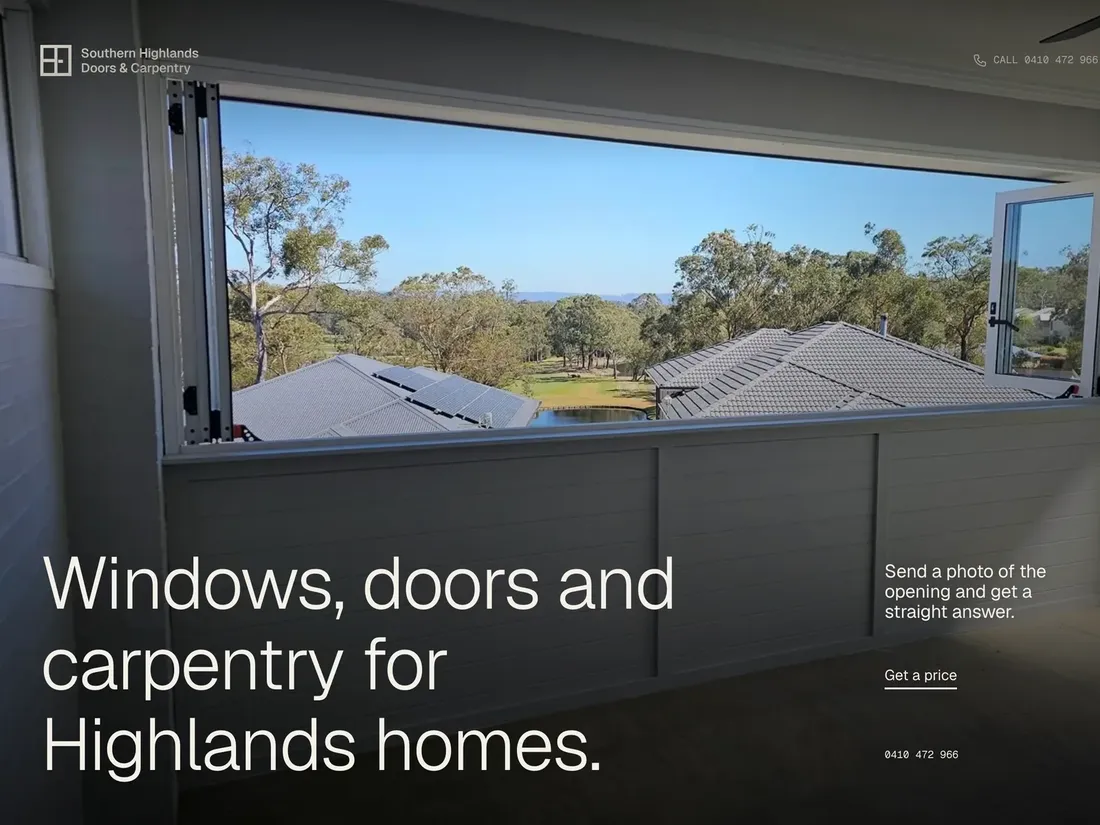

And honestly, it should be fun. Rather than a supplier you deal with once a month, we want to have fun growing your business with you along the way. We're on a WhatsApp group together. We celebrate every win together. When a big job lands, I want to hear about it, and I'll be cheering you on.
More on who we are. Nothing on this page needed your details, and that won't change if you close the tab now. If you'd like to see it for your own business, the button's below.
Sources (57)All accessed 6 October 2026 unless a date is given
"Our calculation" means arithmetic we did on the official tables.
- 1Australian Bureau of Statistics, Counts of Australian Businesses, including Entries and Exits, July 2022 to June 2026 (cat. 8165), data cube DC01, released 18 Aug 2026. abs.gov.au/statistics/economy/business-ind… Back to the text ↑
- 2Australian Bureau of Statistics, Counts of Australian Businesses, July 2021 to June 2025, employment size by industry class (DC02), released 16 Dec 2025. Our calculation across construction classes 3011 to 3299. abs.gov.au/statistics/economy/business-ind… Back to the text ↑
- 3Australian Bureau of Statistics, Counts of Australian Businesses, July 2021 to June 2025, turnover size by industry class (DC03), released 16 Dec 2025. Our calculation. abs.gov.au/statistics/economy/business-ind… Back to the text ↑
- 4Queensland Building and Construction Commission, Maximum revenue. qbcc.qld.gov.au/running-your-business/financial… Back to the text ↑
- 5Australian Taxation Office, Registering for GST, updated 14 Sep 2026. ato.gov.au/businesses-and-organisations/gs… Back to the text ↑
- 6Jenni Romaniuk, "Increasing mental market share by using category entry points". jenniromaniuk.com/blog/2023/1/19/increasing-menta… Back to the text ↑
- 7Ehrenberg-Bass Institute, "Category entry points dissected: how they really contribute to growth". marketingscience.info/news-and-insights/category-entr… Back to the text ↑
- 8Marketing Week, "Marketers' judgement of brand asset strength 'rarely accurate'", 23 Jul 2025, reporting Brus, Hartnett, Faulkner and Driesener in the Journal of Brand Management. marketingweek.com/marketers-judgement-strength-br… Back to the text ↑
- 9IPA, The Long and the Short of It (Binet and Field), presentation. ipa.co.uk/media/5811/long_and_short_of_it… Back to the text ↑
- 10IPA blog, "The next chapter for The Long and the Short of It", Sep 2023. ipa.co.uk/knowledge/ipa-blog/the-next-cha… Back to the text ↑
- 11Kahneman, D. and Tversky, A. (1979), "Prospect Theory: An Analysis of Decision under Risk", Econometrica 47(2), 263-291. web.mit.edu/curhan/www/docs/Articles/15341_… Back to the text ↑
- 12Influence at Work (Robert Cialdini), The 7 principles of persuasion. influenceatwork.com/7-principles-of-persuasion Back to the text ↑
- 13Scheibehenne, B., Greifeneder, R. and Todd, P. M. (2010), "Can There Ever Be Too Many Options? A Meta-Analytic Review of Choice Overload", Journal of Consumer Research 37(3), 409-425. academic.oup.com/jcr/article-abstract/37/3/409/1… Back to the text ↑
- 14Rao, A. R. and Monroe, K. B. (1989), "The Effect of Price, Brand Name, and Store Name on Buyers' Perceptions of Product Quality: An Integrative Review", Journal of Marketing Research. Abstract via Semantic Scholar. semanticscholar.org/paper/The-Effect-of-Price,-Bran… Back to the text ↑
- 15Christensen, C., Hall, T., Dillon, K. and Duncan, D. (2016), "Know Your Customers' Jobs to Be Done", Harvard Business Review, September 2016. hbr.org/2016/09/know-your-customers-job… Back to the text ↑
- 16Meta for Developers, Website custom audiences (retention "between 1 and 180 days"). developers.facebook.com/docs/marketing-api/audiences/gu… Back to the text ↑
- 17Meta Business Help Centre, website custom audience size ("several hundred people"). facebook.com/business/help/1523083297982009 Back to the text ↑
- 18Google Ads Help, About your data segments (100 active users in 30 days; up to 540 days). support.google.com/google-ads/answer/2472738 Back to the text ↑
- 19Google Ads policy, Customer Match ("90 days of Google Ads history and more than USD $50,000 total lifetime spend"). support.google.com/adspolicy/answer/6299717 Back to the text ↑
- 20Meta Business Help Centre, About Advantage+ audience ("except retargeting campaigns"). facebook.com/business/help/273363992030035 Back to the text ↑
- 21Office of the Australian Information Commissioner, Tracking pixels and privacy obligations, 4 Nov 2024. oaic.gov.au/privacy/privacy-guidance-for-or… Back to the text ↑
- 22OAIC, Small business. oaic.gov.au/privacy/privacy-guidance-for-or… Back to the text ↑
- 23OAIC, "Privacy Commissioner finds privacy breaches in third-party tracking pixel investigation", 24 Jun 2026. oaic.gov.au/news/media-centre/privacy-commi… Back to the text ↑
- 24Oldroyd, J. B., McElheran, K. and Elkington, D. (2011), "The Short Life of Online Sales Leads", Harvard Business Review 89(3), March 2011.. hbr.org/2011/03/the-short-life-of-onlin…hbs.edu/faculty/Pages/item.aspx Back to the text ↑
- 25Australian Communications and Media Authority, Avoid sending spam. acma.gov.au/avoid-sending-spam Back to the text ↑
- 26ACMA, Telemarketing and e-marketing: common issues and mistakes. acma.gov.au/telemarketing-and-e-marketing-c… Back to the text ↑
- 27HubSpot blog, "Sales pipeline". blog.hubspot.com/sales/sales-pipeline Back to the text ↑
- 28Salesforce blog, "Sales pipeline review". salesforce.com/blog/sales/sales-pipeline-review Back to the text ↑
- 29HubSpot Knowledge Base, Set up SMS messaging (supported countries). knowledge.hubspot.com/sms/set-up-sms-messaging Back to the text ↑
- 30Pipedrive Marketplace, example SMS app listing (no native SMS). pipedrive.com/en/marketplace/app/twilio-sms-w… Back to the text ↑
- 31HubSpot, Data centres. hubspot.com/data-centers Back to the text ↑
- 32Zoho blog, new data centres for the A-NZ region. zoho.com/blog/general/are-you-ready-aust… Back to the text ↑
- 33Pipedrive newsroom, Sydney data centre, 6 May 2026. pipedrive.com/en/newsroom/pipedrive-accelerat… Back to the text ↑
- 34HighLevel Help, Security and Compliance Overview (core product infrastructure in the US), and How to Select Country Server Location for WordPress Hosting (Sydney available). help.gohighlevel.com/support/solutions/articles/1550…help.gohighlevel.com/support/solutions/articles/1550… Back to the text ↑
- 35Lindgaard, G., Fernandes, G., Dudek, C. and Brown, J. (2006), "Attention web designers: You have 50 milliseconds to make a good first impression!", Behaviour & Information Technology 25(2), 115-126. doi.org/10.1080/01449290500330448 Back to the text ↑
- 36Fogg, B. J. et al. (2003), "How do users evaluate the credibility of Web sites? A study with over 2,500 participants", DUX 2003. dl.acm.org/doi/10.1145/997078.997097 Back to the text ↑
- 37BrightLocal, Local Consumer Review Survey 2026, 11 Feb 2026. brightlocal.com/research/local-consumer-review-… Back to the text ↑
- 38Google, "The need for mobile speed", 8 Sep 2016. blog.google/products/admanager/the-need-for… Back to the text ↑
- 39Google Search Central, Creating helpful, reliable, people-first content, updated 5 Oct 2026. developers.google.com/search/docs/fundamentals/creati… Back to the text ↑
- 40ASIC, Insolvency statistics Series 3.1, 2024-25, released Dec 2025. Our calculation. download.asic.gov.au/media/5codze5r/2024-2025-asic-i… Back to the text ↑
- 41ASIC, Insolvency statistics Series 1 and 2, published 6 Oct 2026 (recent months provisional). Our calculation. download.asic.gov.au/media/dw4n12zo/asic-insolvency-… Back to the text ↑
- 42ATO, Super guarantee rate, updated 17 Apr 2026. ato.gov.au/tax-rates-and-codes/key-superan… Back to the text ↑
- 43ATO, Payment deadlines for Payday Super, updated 29 Sep 2026. ato.gov.au/businesses-and-organisations/su… Back to the text ↑
- 44Queensland Revenue Office, Payroll tax rates and thresholds. qro.qld.gov.au/payroll-tax/calculate-pay/rates… Back to the text ↑
- 45WorkCover Queensland, Queensland Government Gazette No. 43, 26 Jun 2026 (2026-27 industry rates). cdn.workcoverqld.com.au/api/public/content/Queensland-G… Back to the text ↑
- 46Fair Work Commission, Clerks Private Sector Award 2020 [MA000002], rates from 1 Jul 2026. awards.fairwork.gov.au/MA000002.html Back to the text ↑
- 47Treasury, Working Future: The Australian Government's White Paper on Jobs and Opportunities, chapter 4, Sept 2023. treasury.gov.au/sites/default/files/2023-09/p20… Back to the text ↑
- 48Australian Bureau of Statistics, Characteristics of Australian Business, 2024-25, released 25 Jun 2026. abs.gov.au/statistics/industry/technology-… Back to the text ↑
- 49Pipedrive Knowledge Base, The rotting feature. support.pipedrive.com/en/article/the-rotting-feature Back to the text ↑
- 50HighLevel Help, A list of workflow triggers ("Stale Opportunities"). help.gohighlevel.com/support/solutions/articles/1550… Back to the text ↑
- 51HighLevel Help, Conversations: how to add internal comments and mention users. help.gohighlevel.com/support/solutions/articles/1550… Back to the text ↑
- 52HubSpot Knowledge Base, Mention a user on a record. knowledge.hubspot.com/records/mention-a-user-on-a-rec… Back to the text ↑
- 53CRM and job tool details in section 8 (free plans, trials, AU support, integrations) come from each vendor's own site and pricing page, linked in that section, read 7 Oct 2026. Back to the text ↑
- 54Our review of eight gated "blueprint" lead magnets for trade and construction businesses (five Australian, three US), 6 Oct 2026. Back to the text ↑
- 55Google Business Profile Help, Tips to improve your local ranking on Google. support.google.com/business/answer/7091 Back to the text ↑
- 56LinkedIn B2B Institute, The 5 Principles of Growth in B2B Marketing (Les Binet and Peter Field, 2019). business.linkedin.com/advertise/resources/b2b-institu… Back to the text ↑
- 57Christensen Institute, Jobs to Be Done theory (definition read from a search extract, not the full page). christenseninstitute.org/theory/jobs-to-be-done Back to the text ↑